My Interiors

Believe it or not, accept it or not – your space is a manifestation of your mood, state of mind, your values, and way of thinking, and in return, the space you find yourself in affects your mood and state of mind. Your space is a reflection of you – that can’t be denied – even if you live in a home that is far from your dream home. Even if you live in a temporary, small rental that seems impossible or pointless to design or decorate, there are still numerous (and inexpensive) ways to improve it. You would be surprised by the evidence we have gathered over years of research on how spaces affect us.

Of course, your space isn’t the most important thing in the world; it is a bunch of material things, and you will probably agree that life is more than owning things, admiring them for their beauty, and obsessing over aesthetics. There are so many other more important things… or are there? In the long run, we’re all dead. However, while we’re still here, why not have some fun?

I am an interior design freak, and I am not ashamed to say it. I am so crazy that I have spent way more money, time, and energy than I should have on many spaces I have inhabited in my lifetime. At times, I regretted it, but regret didn’t do much; I kept going. (I have done many makeovers for others, as well.) This last project is what I consider my forever home, so I often use that as a justification for redoing things until I can no longer stand. However, I don’t really need a justification.

Is there such a thing as a perfect home? Probably not. Even if there was, most people couldn’t afford it. Even that perfect home would have some downsides, I am sure. For example, maintenance costs. Does living in a perfect home even matter? Not really. Still, I love improving the space I live in, and I love to help others do the same with their spaces. If there is really no divine purpose or importance in any of it, why do I keep doing it, you might ask. Because I can’t not do it. (Robert Sapolsky will confirm this; just ask him why people do what they do.)

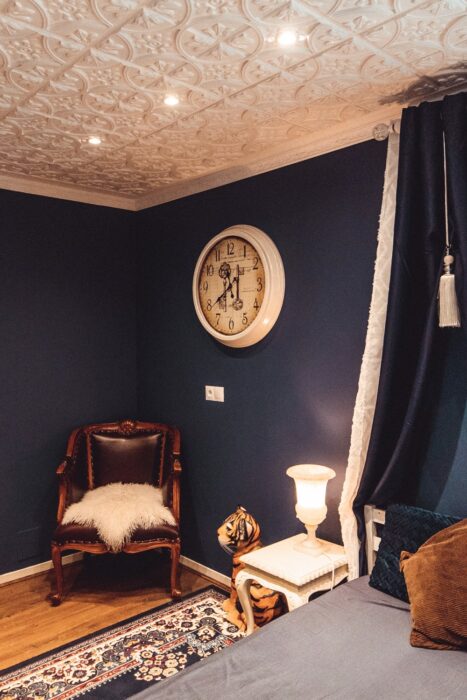
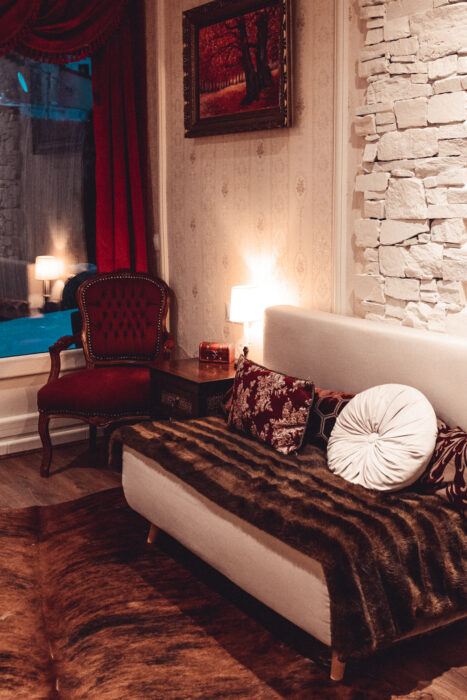
I will share a few makeovers I have done in the past few years that I remembered to photograph. These are real spaces I designed using what I had and the time I had. The most recent one is probably my favorite, so I will start with that one.

It doesn’t matter which style you choose; design your space for you, not for an imaginary audience or future buyers. Do what makes you really happy, but try to respect at least some basic rules of aesthetics. Other than that, you are free! Free to go wild and get rid of the sea of grey or beige – no matter what the current TikTok trends or future buyers say.

The interiors you will see here are real spaces; they were not staged for the photoshoot. I created them for real life, and this is what they look like every day.

Let’s start with my favorite and most recent one:

Pretty Good: “The forever (ever-changing) home”

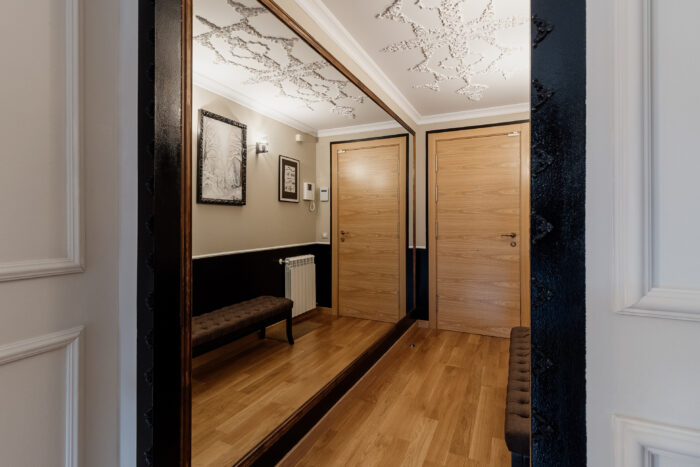
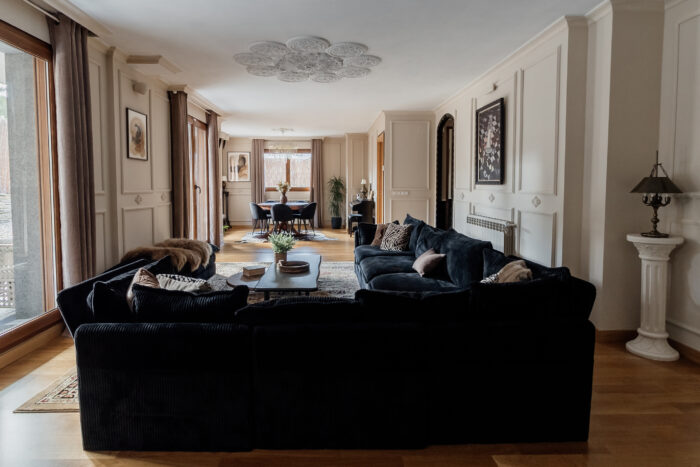
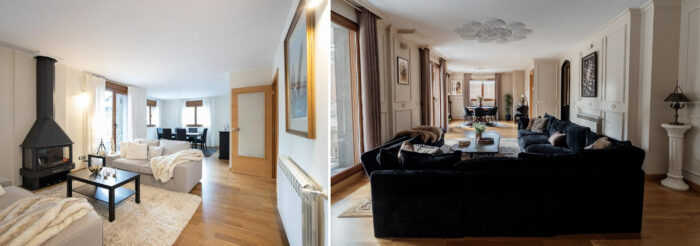
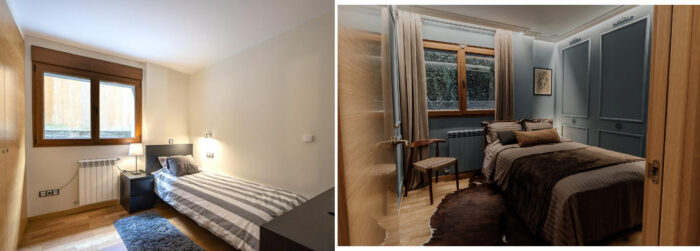
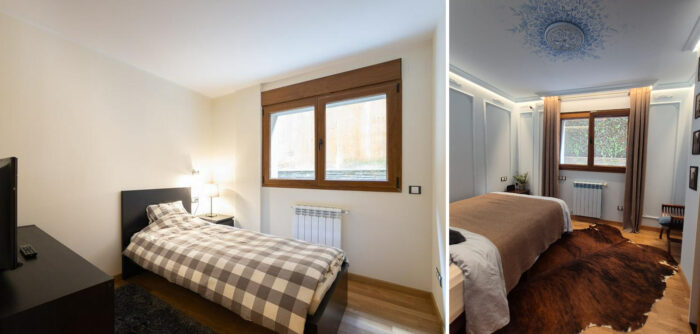
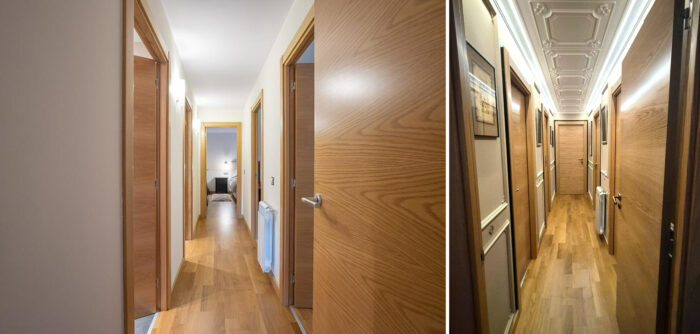
When I got this place, it was a disgrace. Seriously – and I will show you the pictures, so you will see I am not exaggerating. Everything was builder-grade, cold, completely flat; nothing was interesting, beautiful, or designed. It didn’t feel like anyone had ever lived there. (Later I found out the former owners spent very little time there, and that made sense!)

The space itself was OK; it was large enough. There were gardens, which was good. It had a lot of potential. However, I knew I’d have to move walls, break them, close some doors, open new ones, and paint, design, and decorate like a maniac. And I sure did.

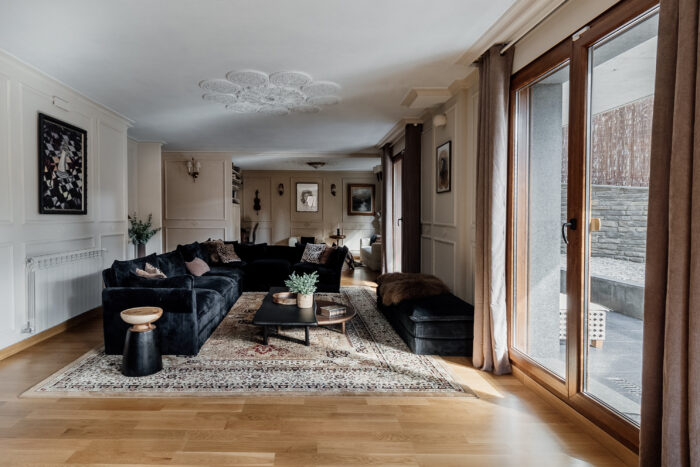
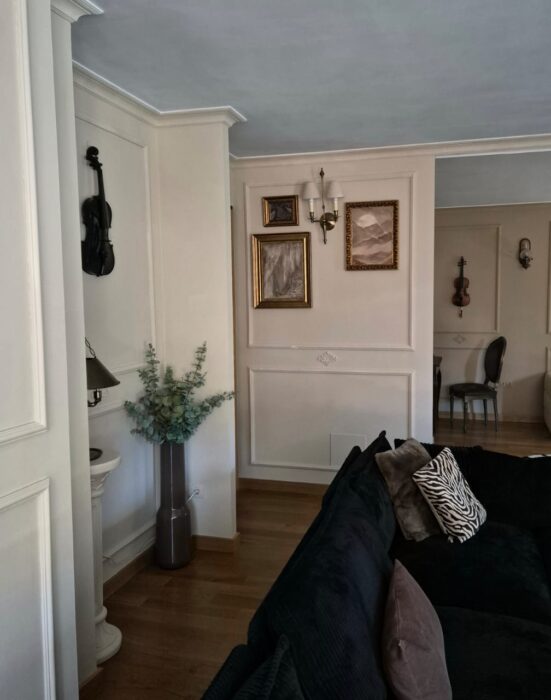
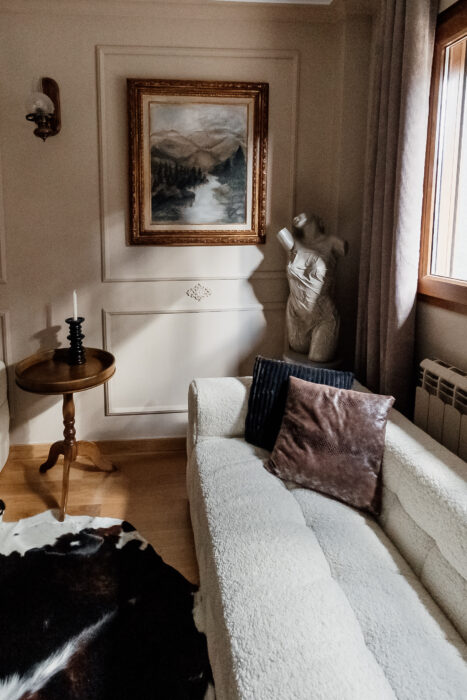
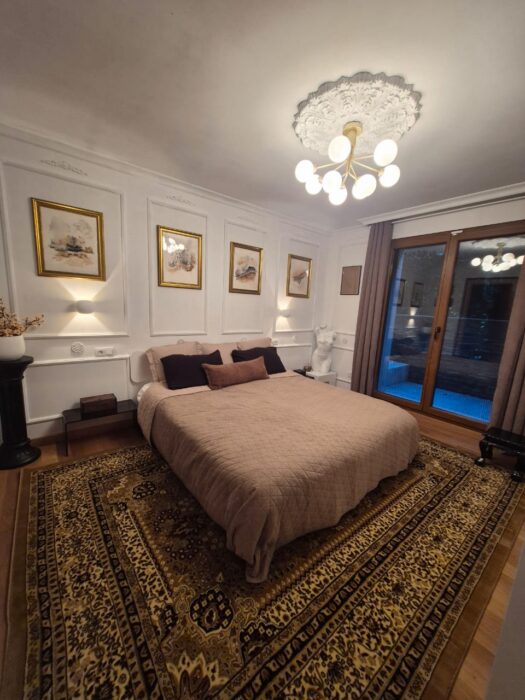
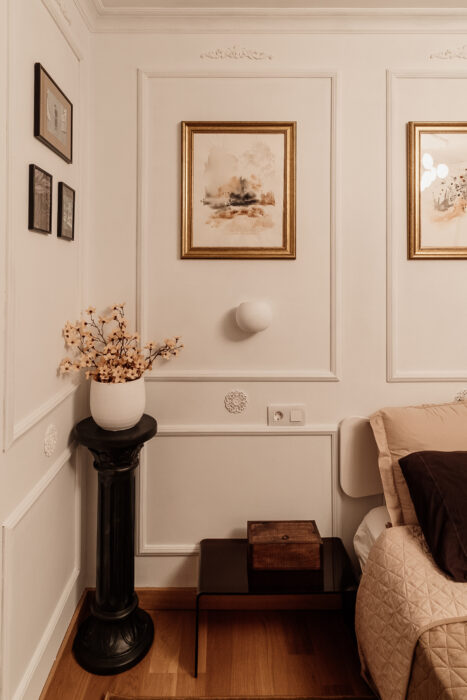
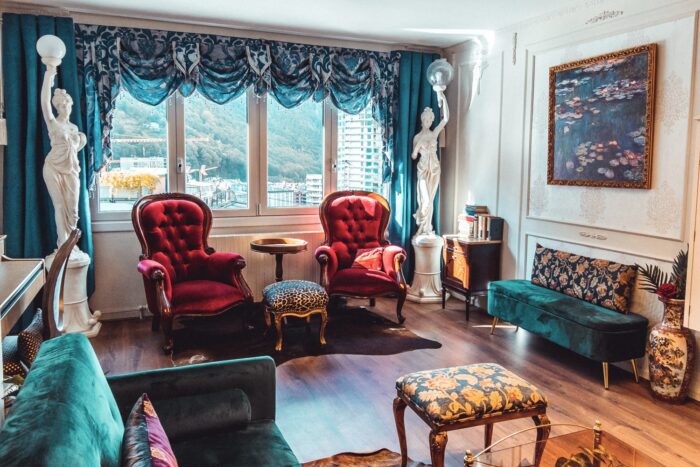
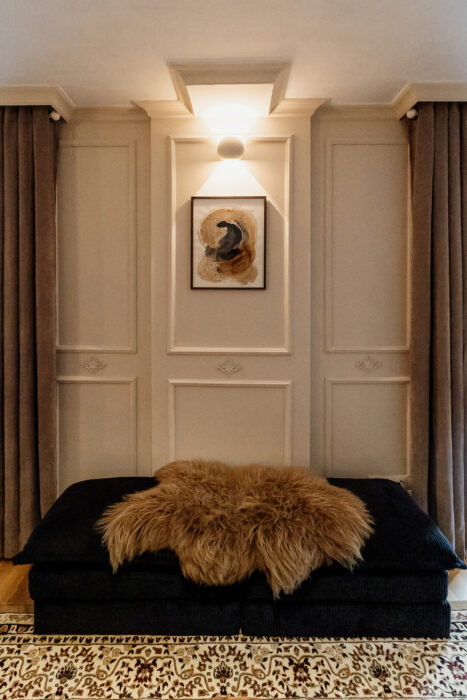
I know a few fellow expats, and many of them share similar tastes: old world charm, Victorian, neo-Victorian, eclectic… good stuff. The exterior of this place wasn’t really a townhouse; it wasn’t an entirely mountain home either, but it kind of was… a little. Stone facade and wooden balconies… You get the picture. I had to keep that in mind – the exterior and the interior should not collide and hate each other; they should be in harmony as much as possible, in terms of colors and style. This was a big challenge. I cannot live in a rustic home; although such homes can be cute, that is all they are for me – a cute weekend house where you spend no more than a few days a month. But to live in it 24/7? It’s just not for me. (There are also some other interior design styles I love to see in photos, but not live in them!) I had to be careful, though, so I included several rustic elements like cow/sheep hides; I kept the wood everywhere (I LOVE wood)… and that was kind of it. The problem was that the interior, as I found it, apart from being terrible, didn’t even match the exterior. The interior was trying to be contemporary, but it looked cheap, unfinished, undesigned, cold, and completely incoherent. It was BAD. Ugly grey tiles were in all the bathrooms and on the kitchen floor. The lighting was a disaster. The interior doors were ugly, and still are (I will change them as soon as I can. For now, I only changed the handles, and they already look much better).

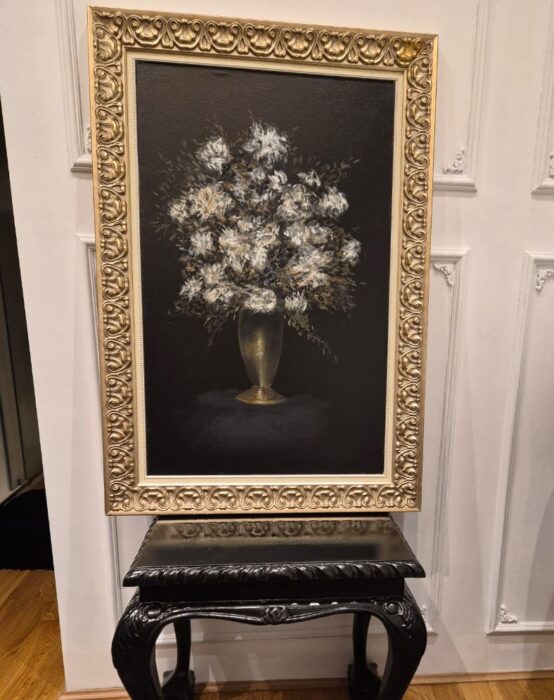
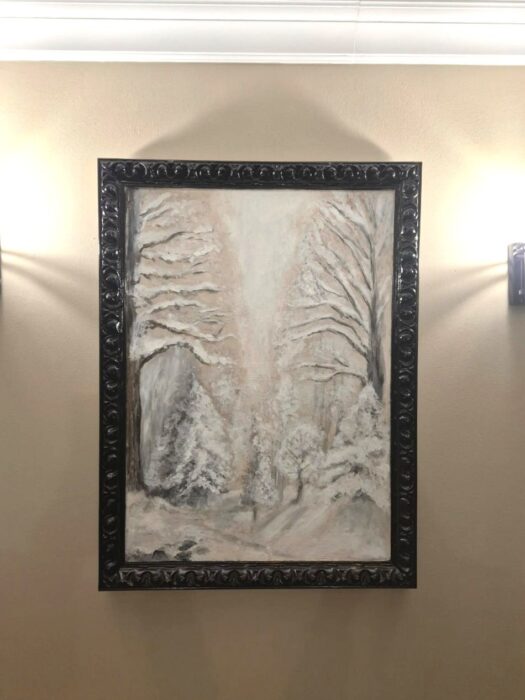
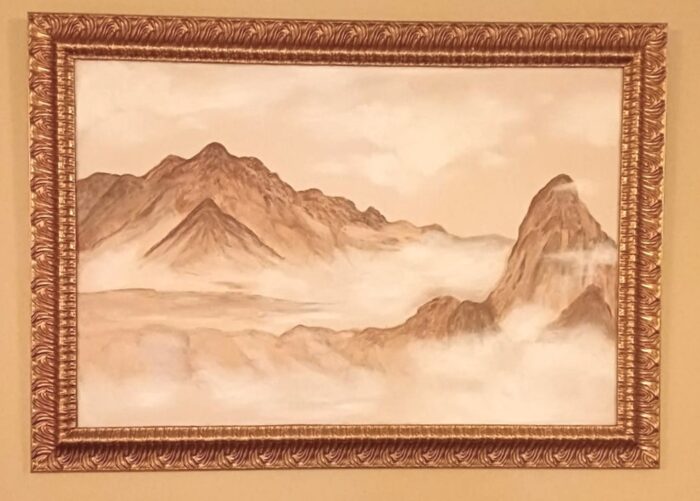
I was surprised by the collective lack of taste, as if the whole country were trying to become Tokyo-like (while still preserving some of the beautiful, traditional stone buildings that are, luckily, protected and cannot be altered). (At one point, I realized that style is not something you see often in this otherwise naturally beautiful country, and I had to outsource absolutely everything – furniture, mouldings, and antiques. I made the art myself, so that wasn’t much of a problem. I shouldn’t judge anyone for a lack of style. I should judge them for other things, but I’ve learned not to! Or so I believe.)

There is just one category of people that I still choose to judge, even though I know it is pretty stupid of me. A few times, I have seen the look on the faces of “rich wannabes” who still don’t understand that money cannot buy taste, staring at some of my interiors, looking confused. They thought a Chesterfield sofa was “old,” “outdated,” and “no longer trendy,” and that is probably the safest way to get me to think very badly of you: be obsessed with Instagram trends + speak badly of the Chesterfield sofa. I mean, what ARE you?! An ugly grey bulky couch, no matter how expensive, will never, ever have the status of a Chesterfield, or its beauty (I know what you might say, but no, beauty is not always subjective. There are a few things about it that can literally be calculated!)

Don’t get me wrong – contemporary interiors can look great, and I love many of them. But they need to be done correctly. There are many ways for lovers of contemporary style to get it right, and it often involves an antique or two; it usually includes warm, honest materials and a few timeless pieces that don’t fall into any “trend.”

I am a fan of everything Victorian; I love Art Nouveau, I also love Ralph Lauren interiors, dark academia – even light academia aesthetics; I also love it when people incorporate some of those elements in their contemporary-style homes. Obviously, I lean more toward the traditional style, but now I had to add a touch of modern (I had no choice – the building is not old enough!), and then just keep doing the endless and exhausting voodoo to make it all look and feel harmonious, functional, coherent, and pleasant to live in. For some reason, I kept the black counters and backsplash in the kitchen, but I shouldn’t have. Now, for cohesion, every room has at least something black – and I don’t hate it, but I would not have chosen it if I were to start again.

The thing is, you don’t get it right the first time—perhaps not even the second. There is always plenty of trial and error, testing and experimenting, being happy for five minutes only to realize that it is all completely wrong…. I have been there, too.

Some of the rooms now:
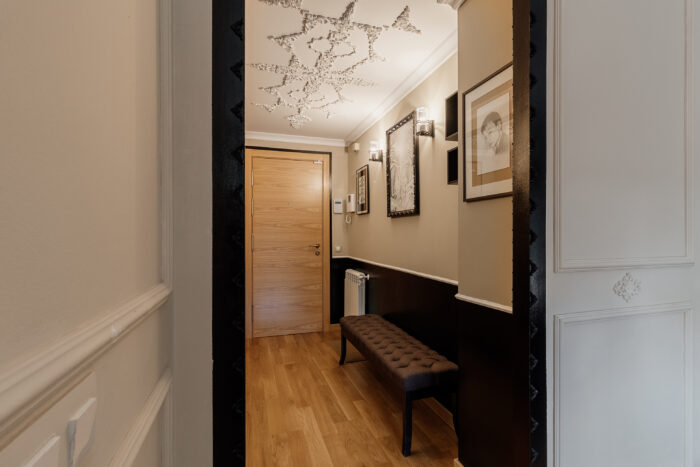
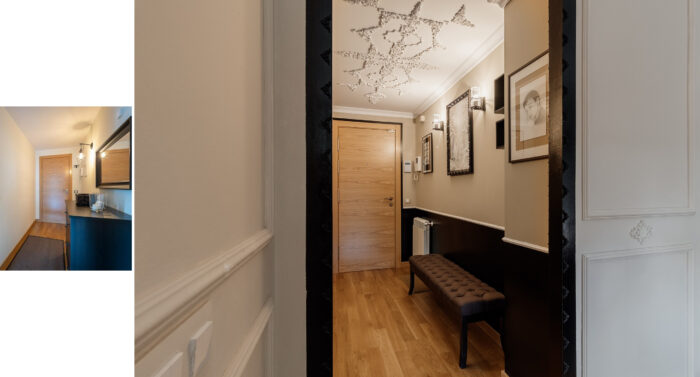
Entrance
Entrance


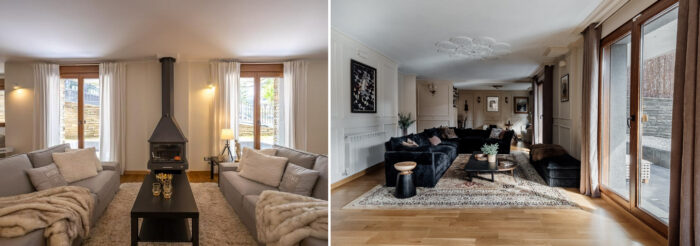
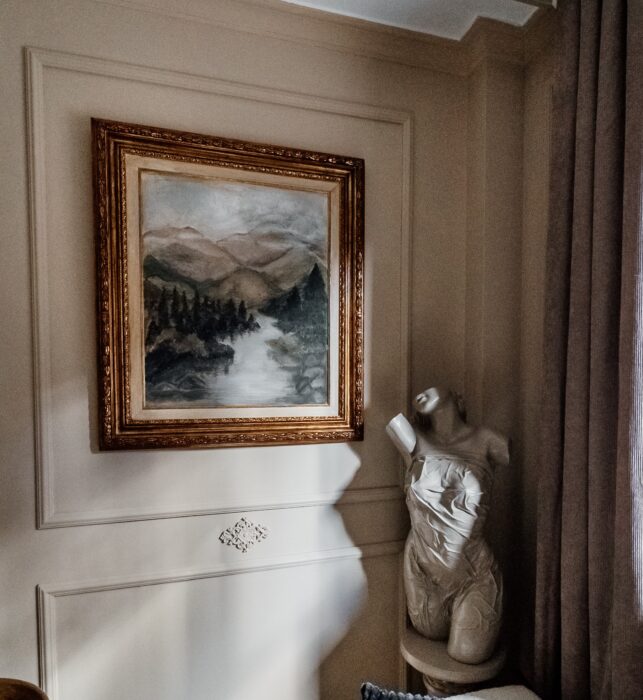
Living Room

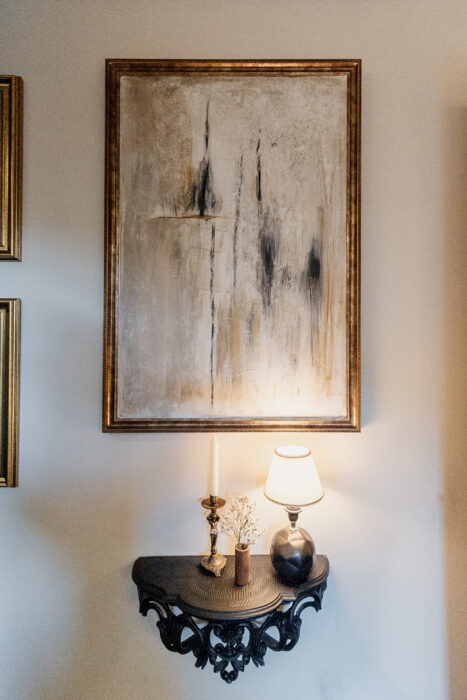
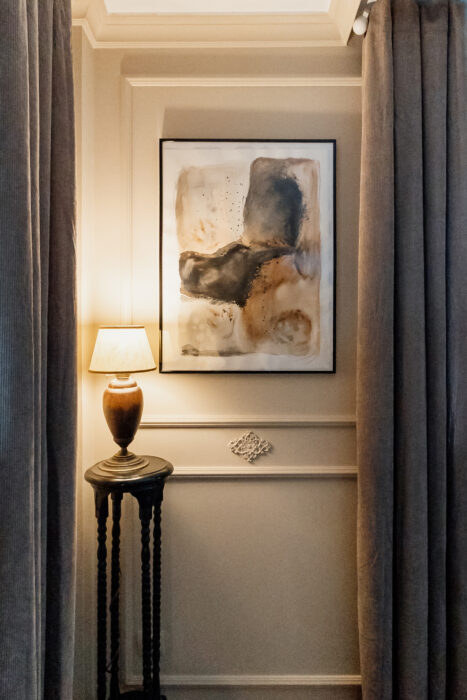
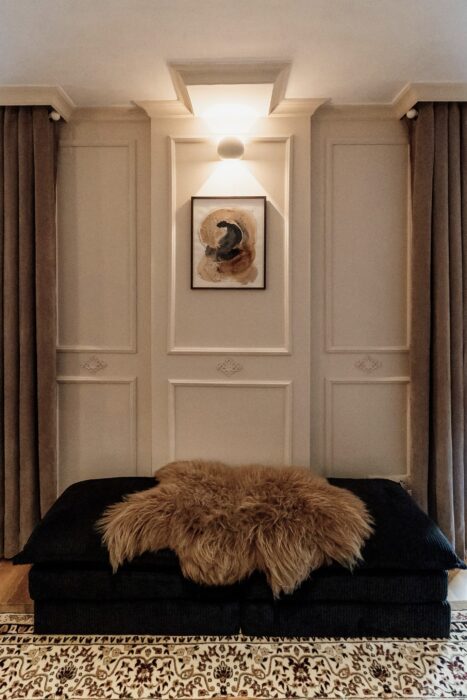
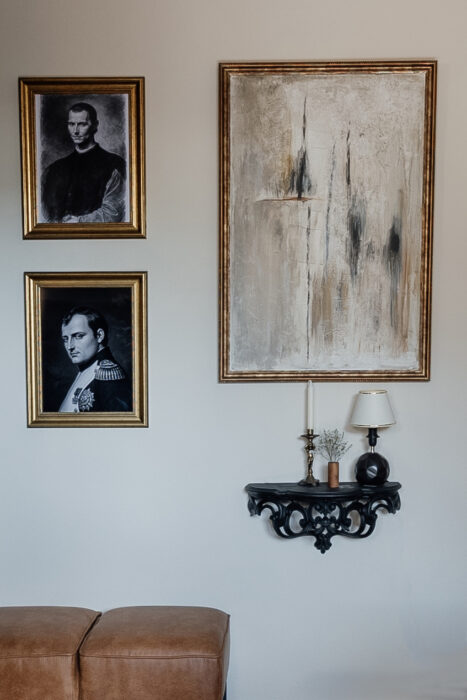
Library/TV room
Library/TV room
Library/TV room
Library/TV room
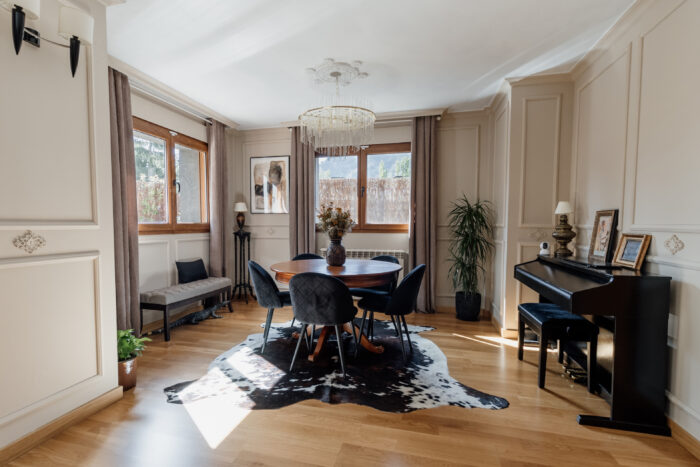
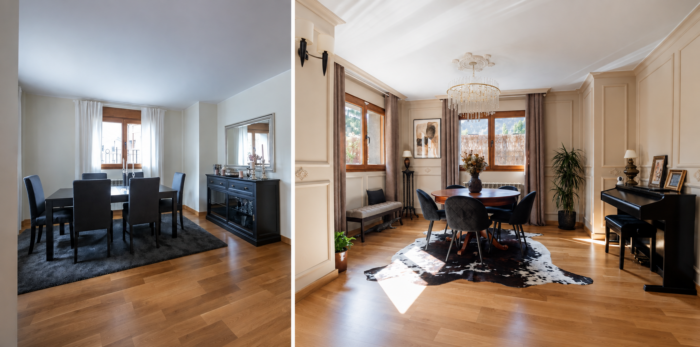
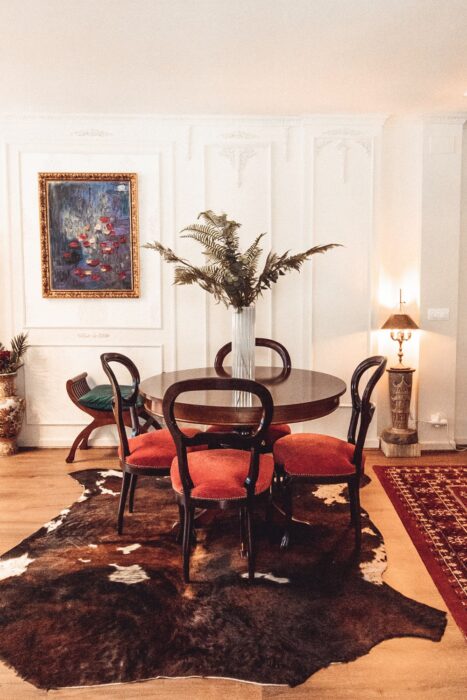
Dining Room
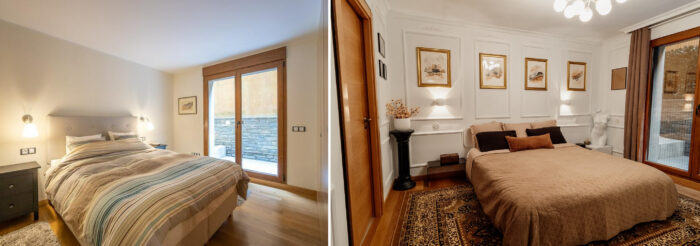
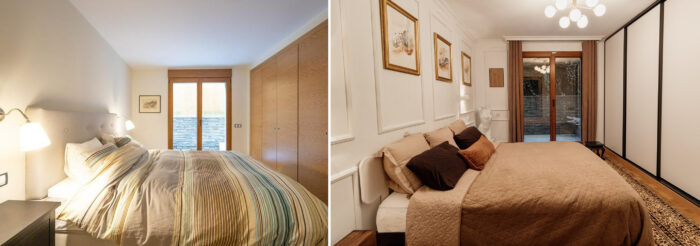
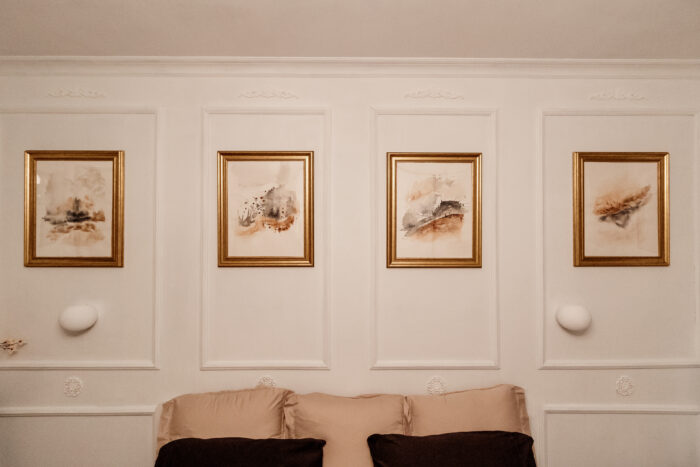
Master bedroom
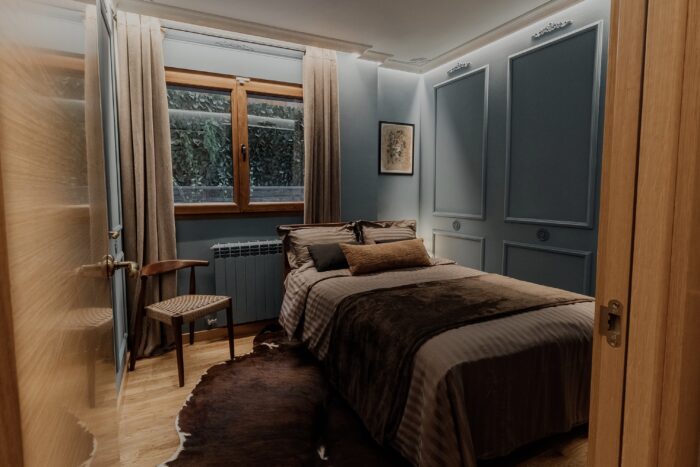
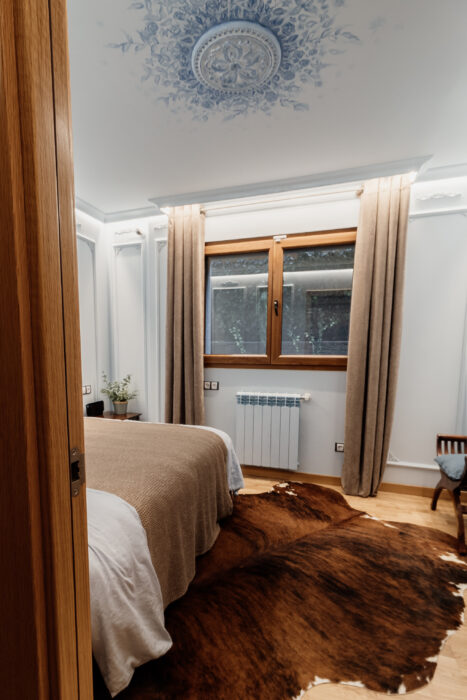
Guestroom
Boy’s room
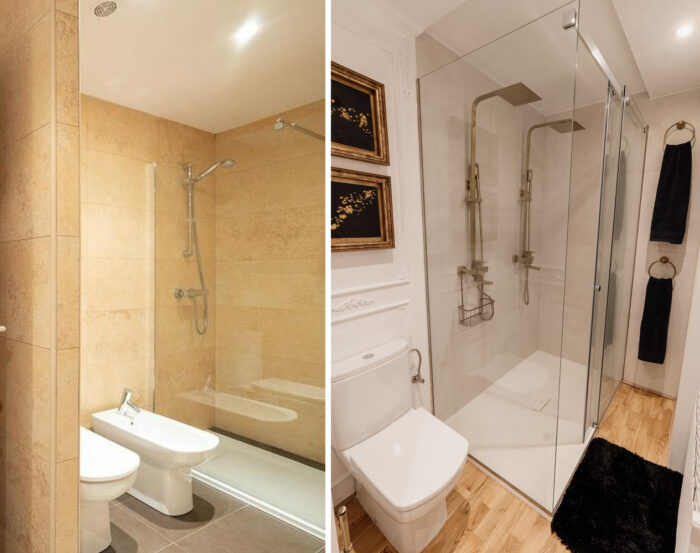
Boy’s bathroom
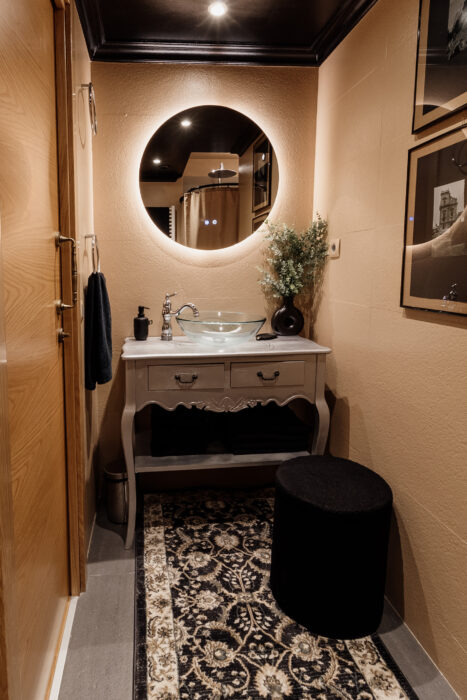
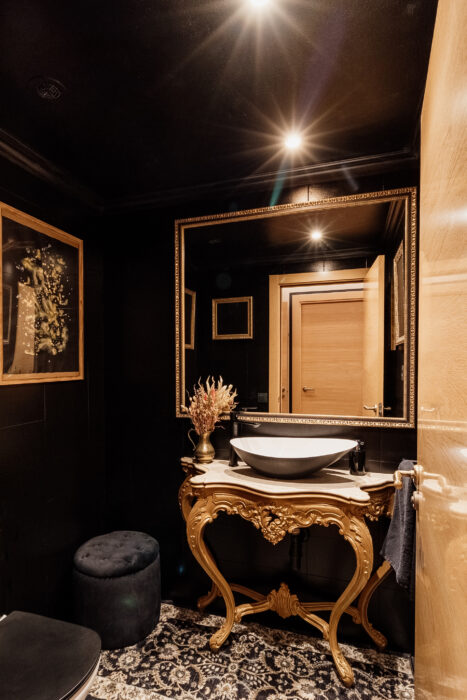
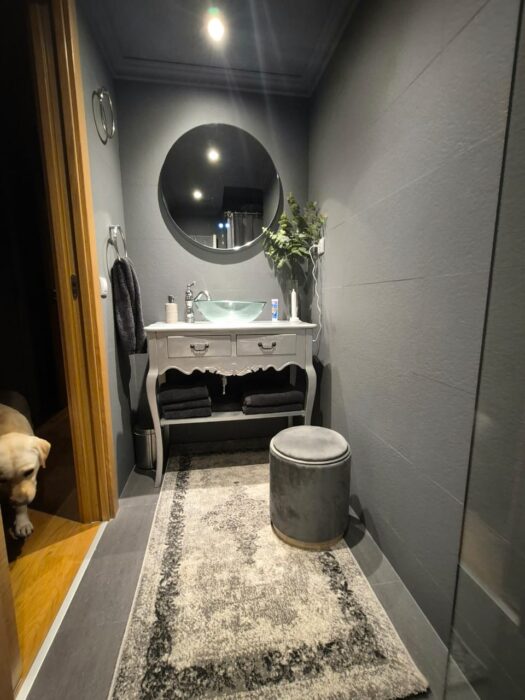
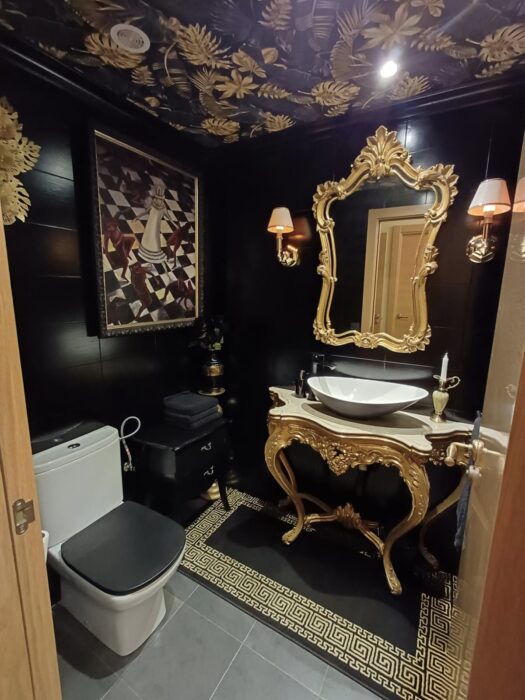
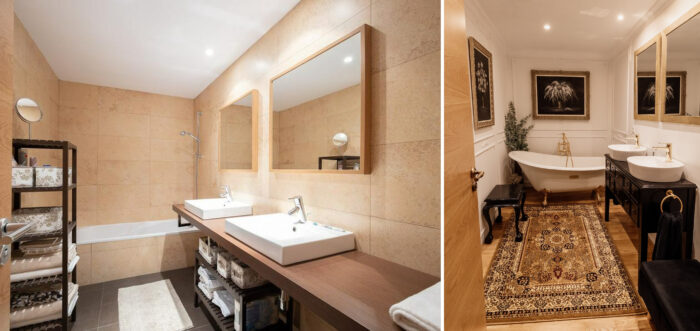
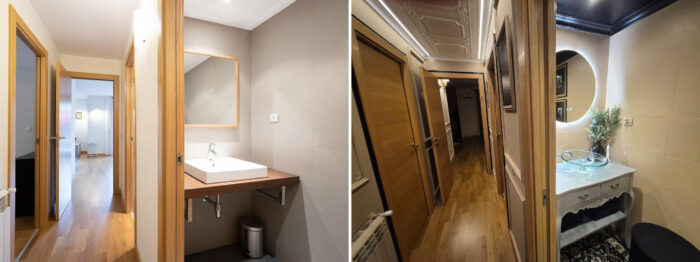
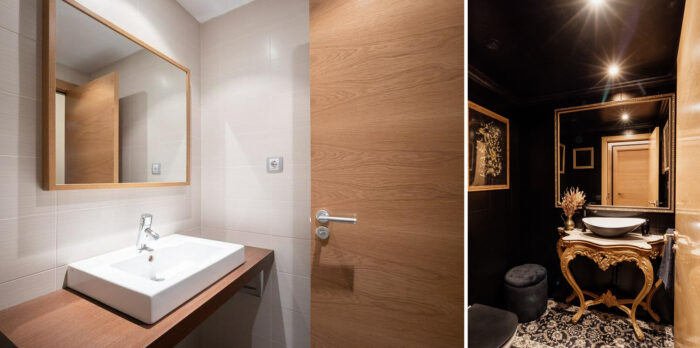
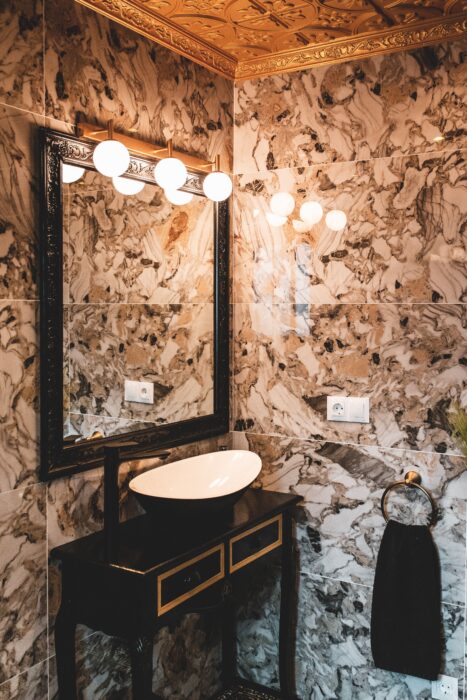
Powder room
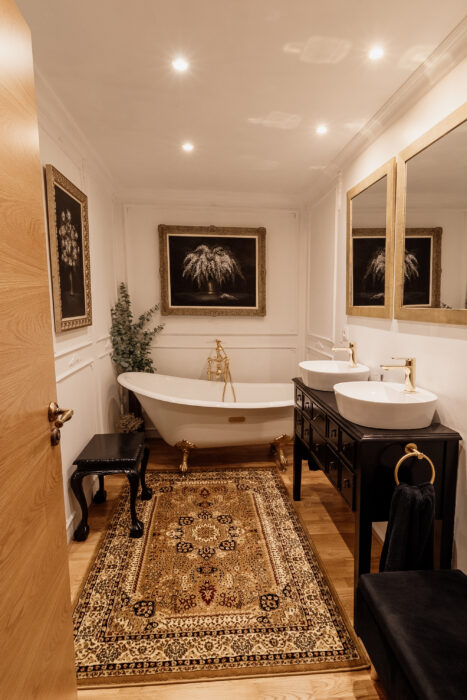
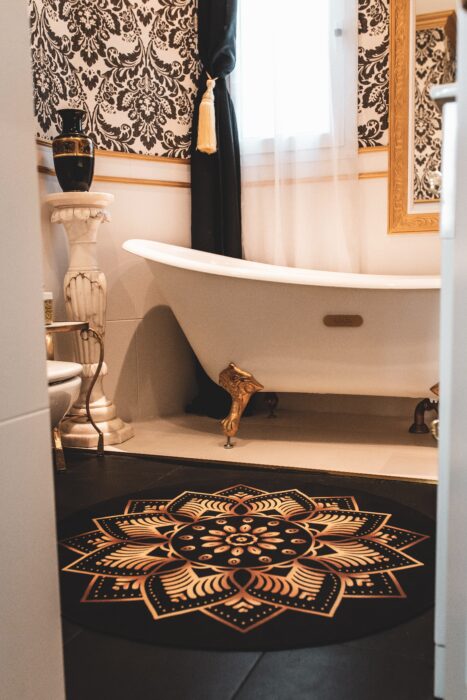
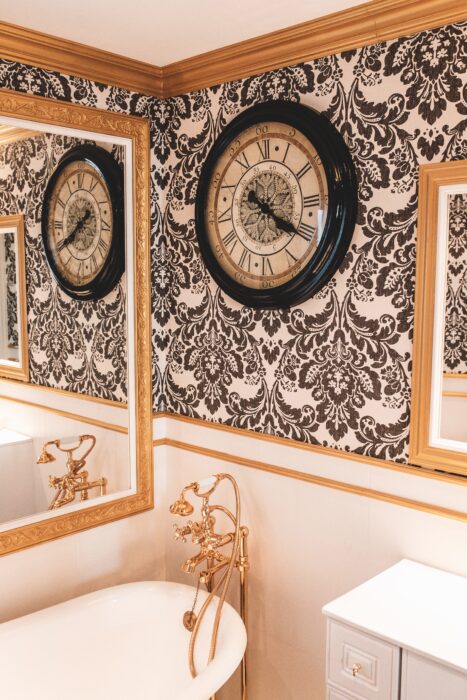
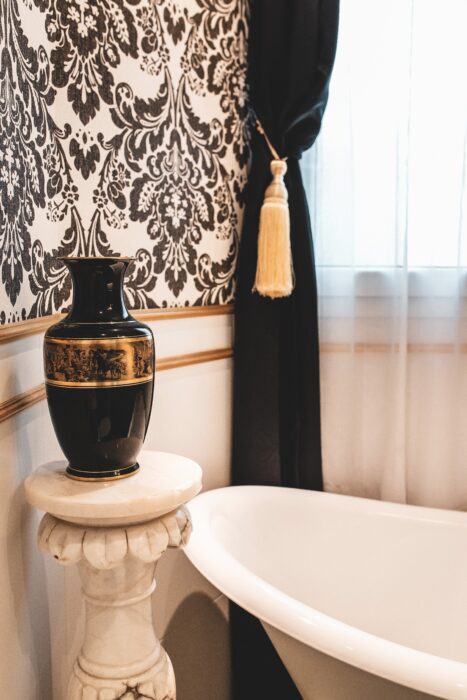
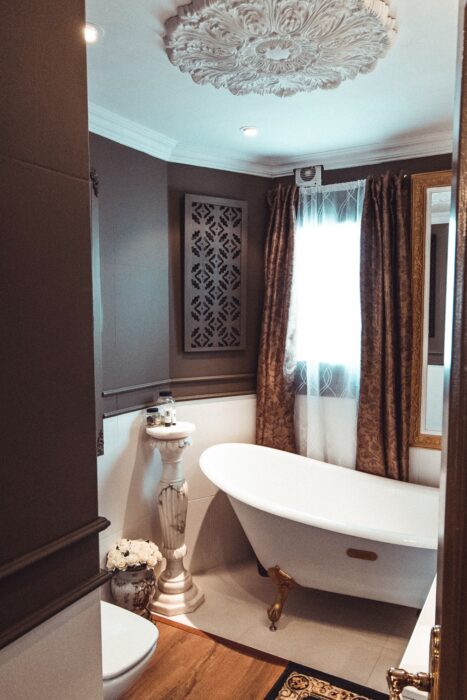
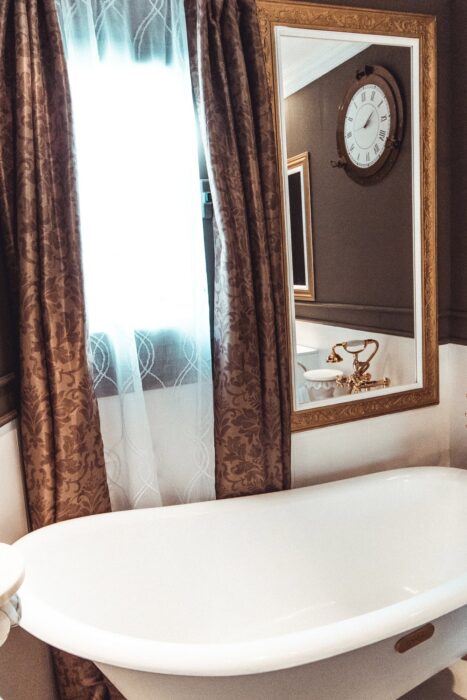
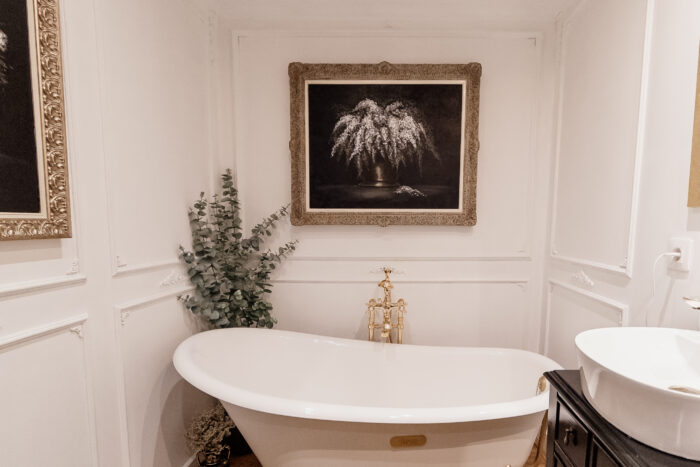
Bathroom
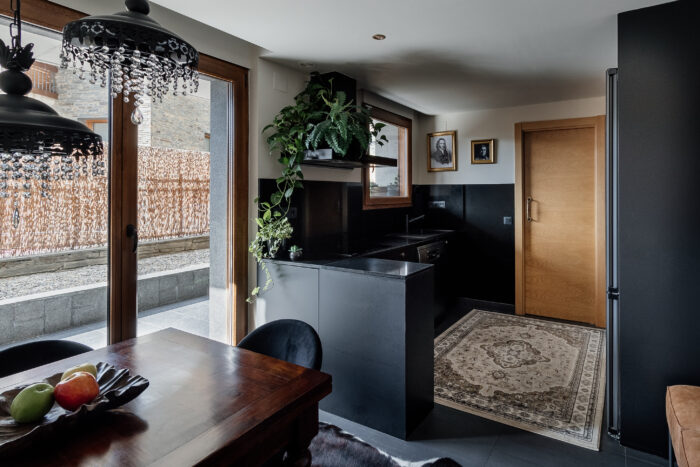
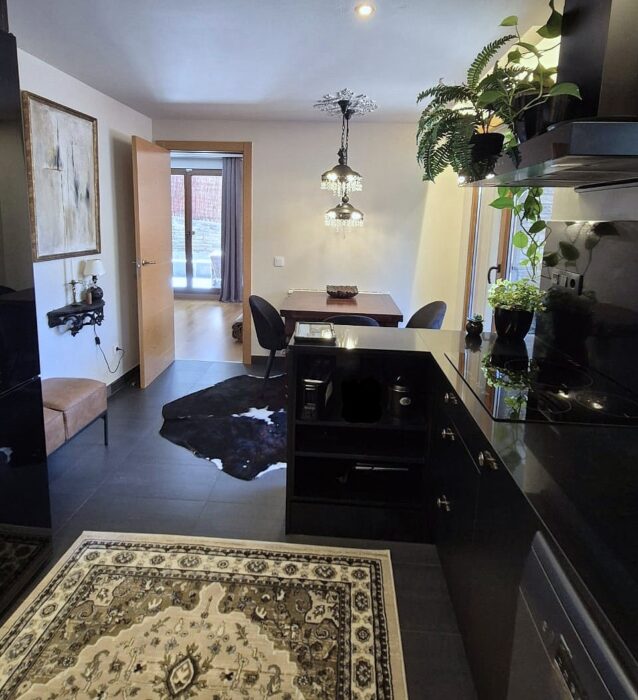
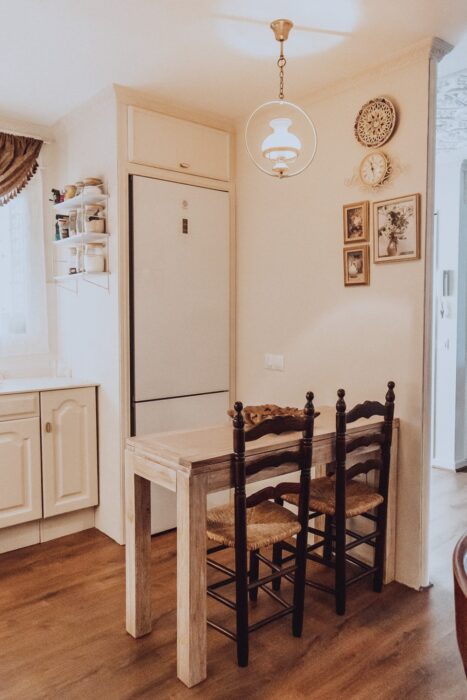
Kitchen
Kitchen
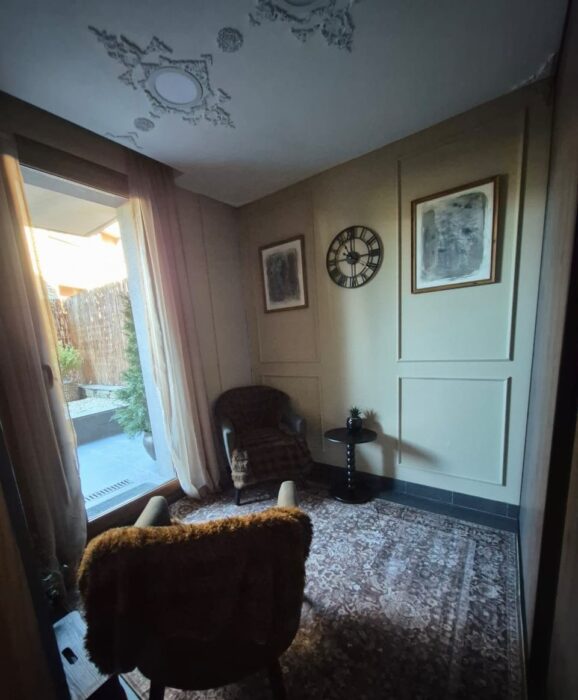
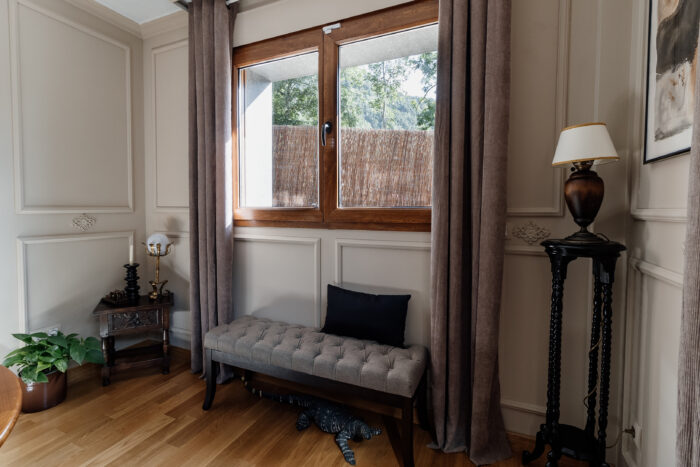
Moody coffee room

I have experimented with some of the spaces, and here are some variants I tested before:
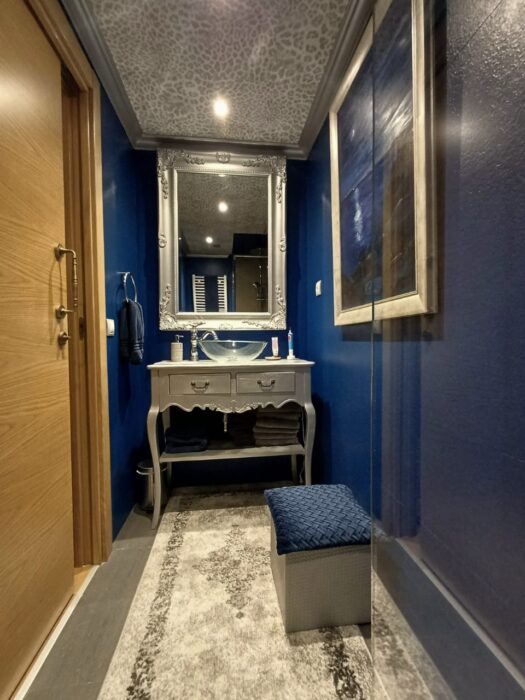
Boy’s bathroom, blue
Boy’s bathroom, grey – I hate grey, by the way!
Kitchen

Went wild with the powder room.

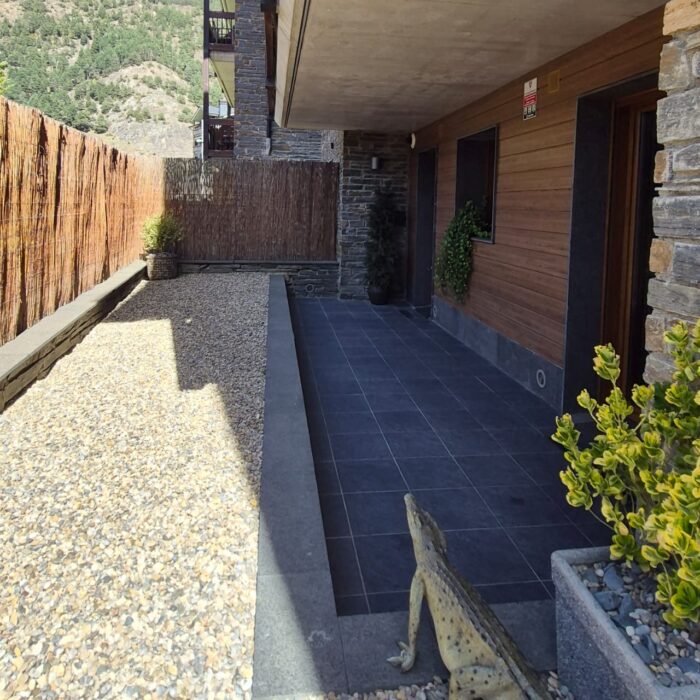
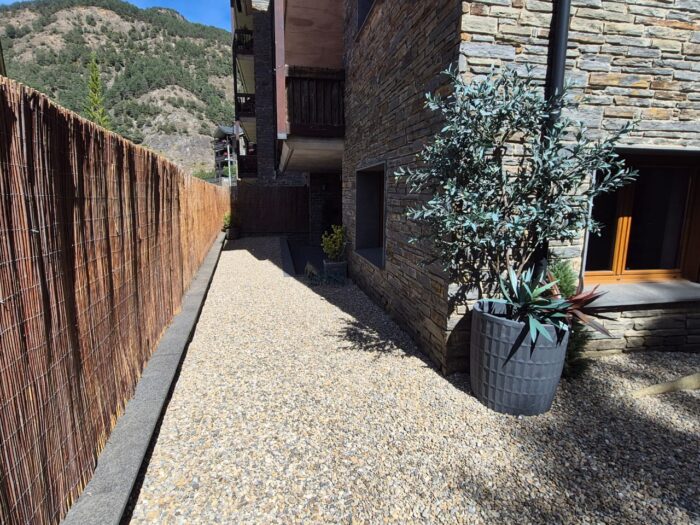
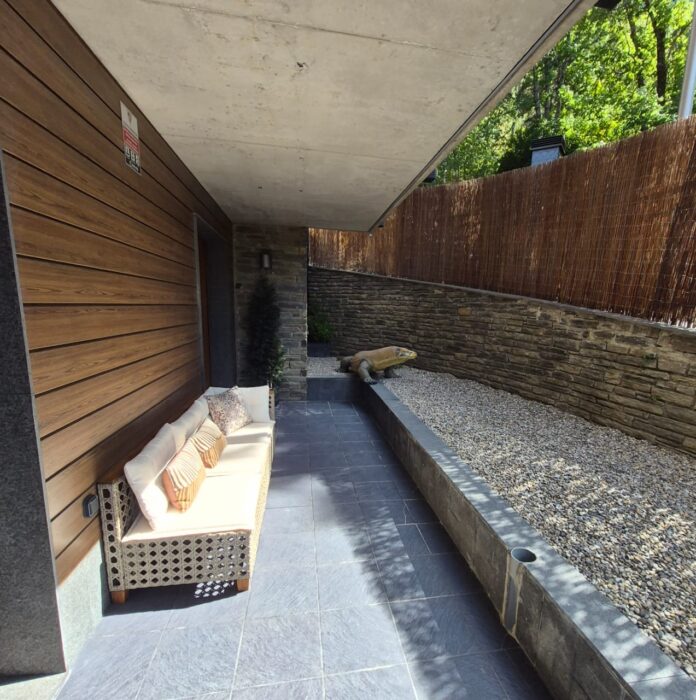
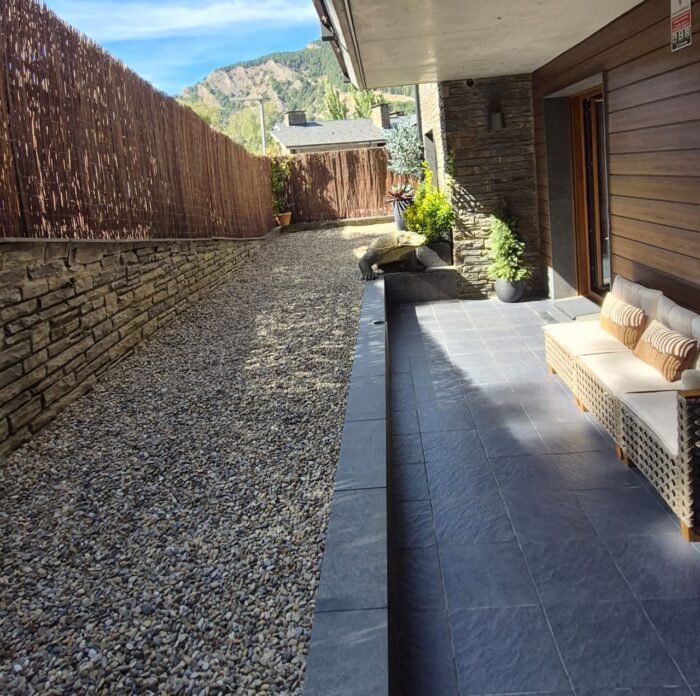
Parts of the exterior:

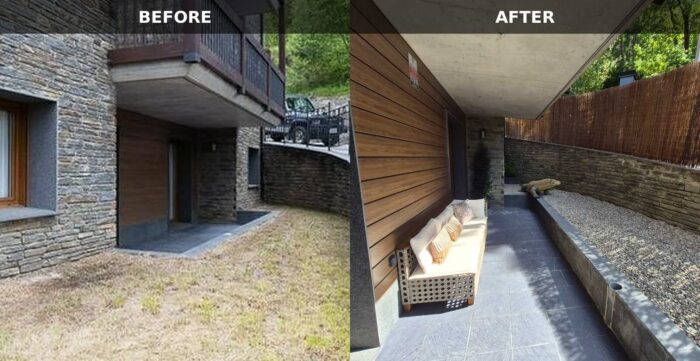
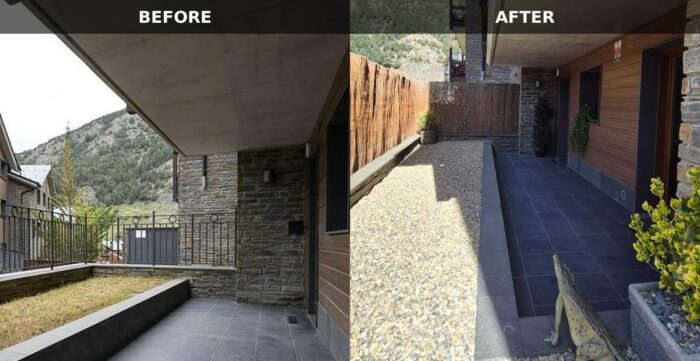
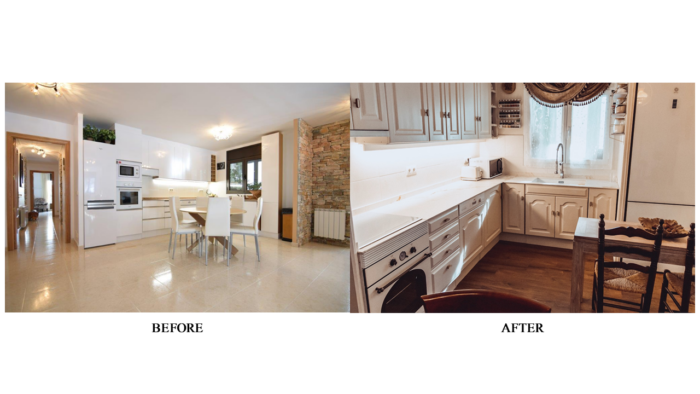
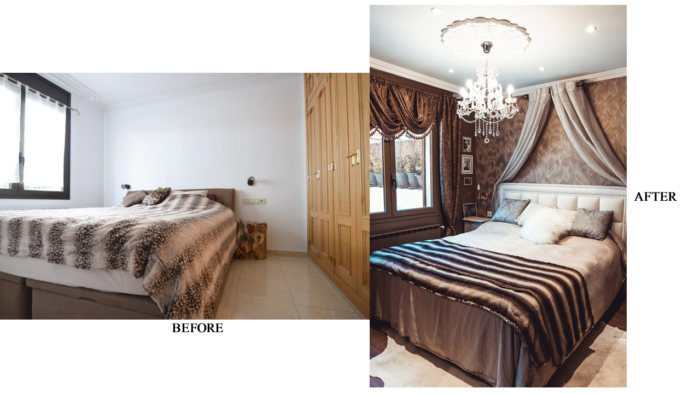
The place did not always look like this. Not even close! Look at the before and after photos:
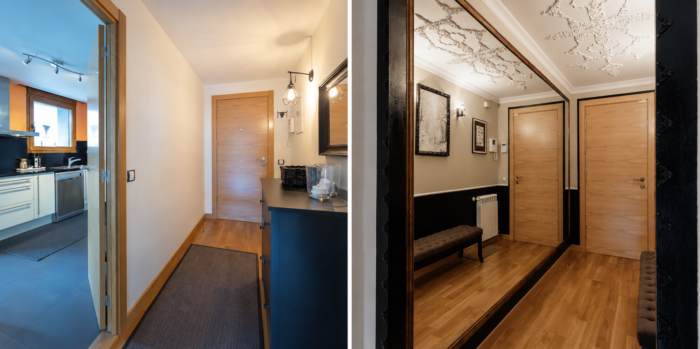
Before and after, entrance


Before and after


Before and after


Before and after


Before and after


Before and after


Before and after


Before and after
Before and after
Before and after
Before and after
Before and after
Before and after


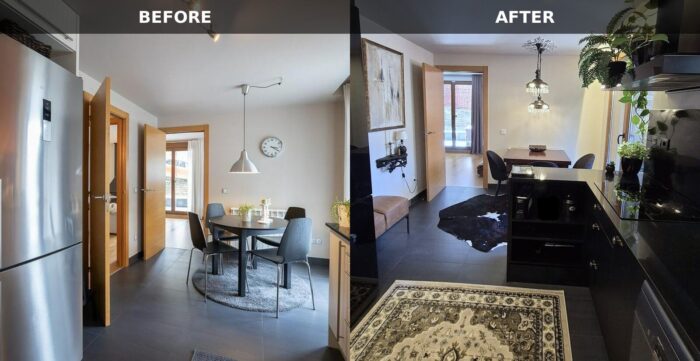
And last but not least: the kitchen that will forever puzzle me.
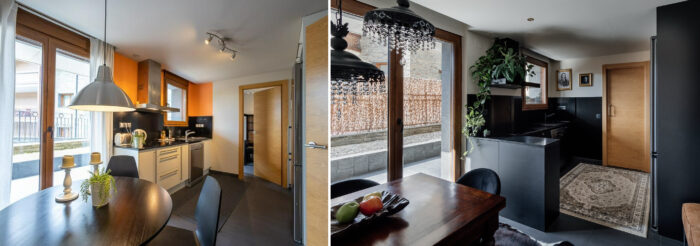
Before and after

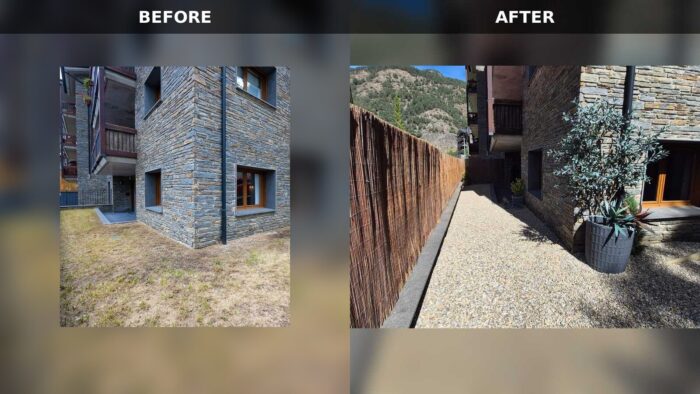
The exterior: before and after

Imperfect but fun: I like to call it ” The Minimalist’s Nightmare”

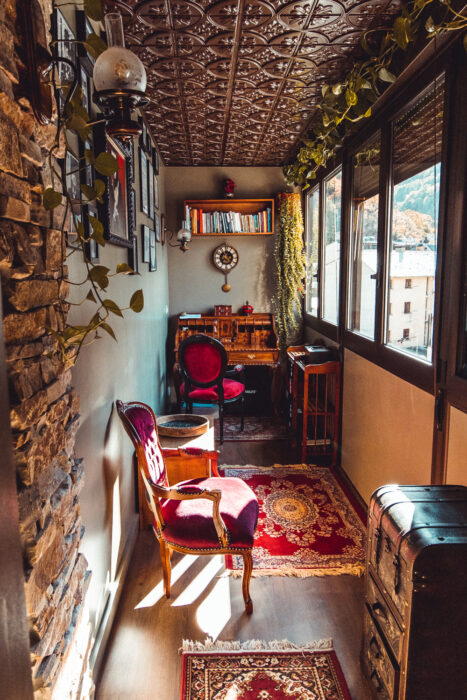
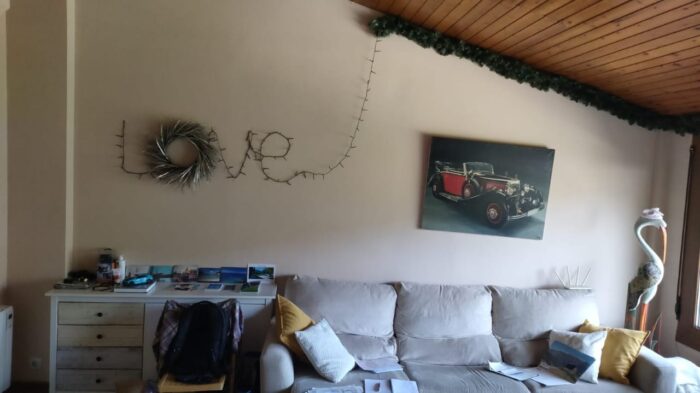
When I first moved into this place, I hated it. It wasn’t a bad purchase; it was just the wrong one. I hated the layout, the materials, and overall… I disliked the feel of it. I spent three years trying to make it at least fun. I knew I would never be able to fix some issues, like narrow hallways and ceilings that weren’t high enough for me (nothing ever is, to be honest). Still, I knew I would live there for at least five years, so I thought to myself, “You better start fixing this, or you will go totally nuts.” And I did. I mean, I started fixing it, not going nuts. Well, maybe a little. It took me a year just to figure out what I could do there without making it look too weird. It was an older building, but not old enough for me to love it. It was a 40-year-old building, meaning it had all the worst features you could think of (materials, colors, layout – you name it). When I moved in, I brought some of the very rustic pieces of furniture from my mountain place. I also am not a fan of rustic, truth be told. I find it too “raw”, and more suitable for a weekend place than a “serious” home. Rustic can look good in small doses; that is, at least how I feel about it. This was located in the city, so there was no need for anything that rustic anyway. That was the good news. The bad news… it was all very ugly. Perhaps that was the good news after all; I had nothing to lose, so I went wild.
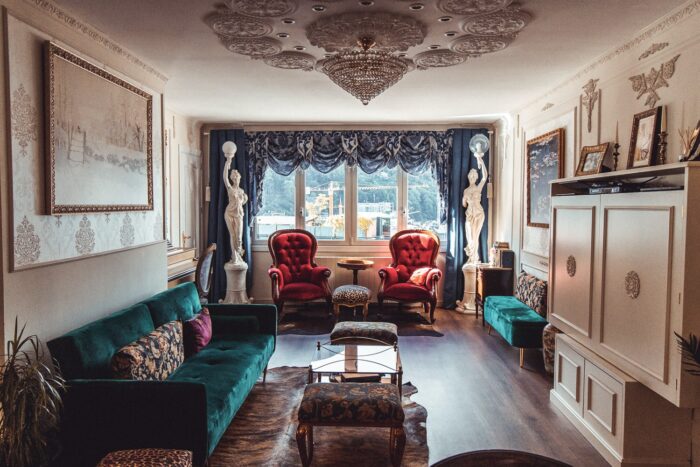
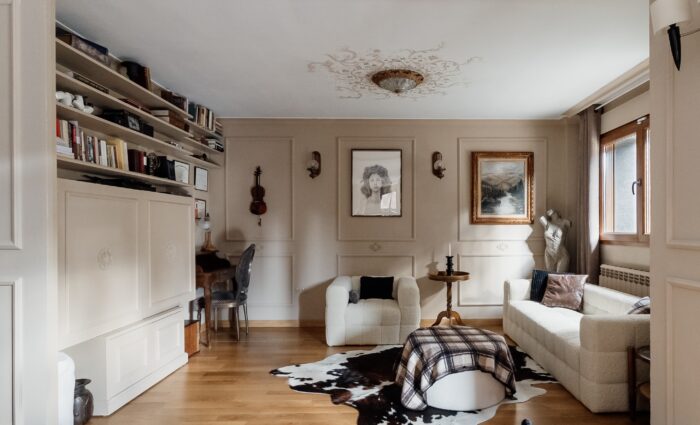
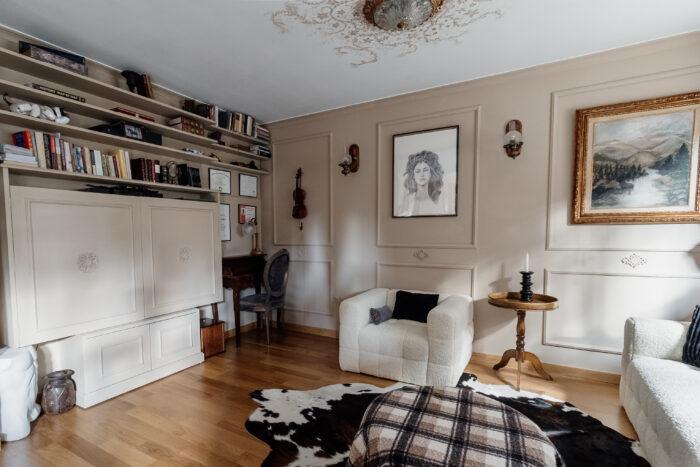
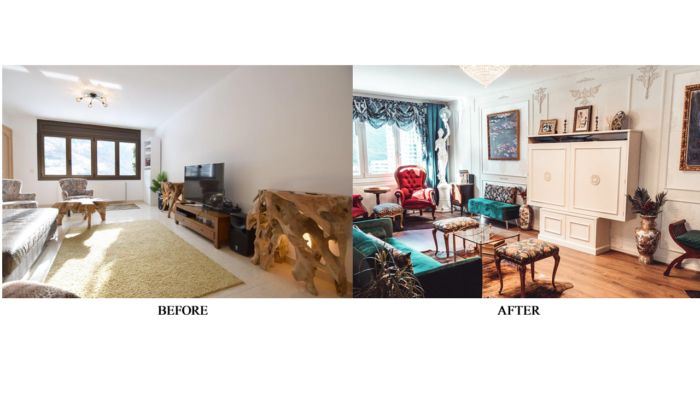
Minimalist’s nightmare. I was having a great time, though. It was everything but boring. The TV is hidden inside the custom-made cabinet; the antique tabourets were restored and reupholstered. This was one of the boldest rooms I have ever created.

Here are some “Before and Afters”:
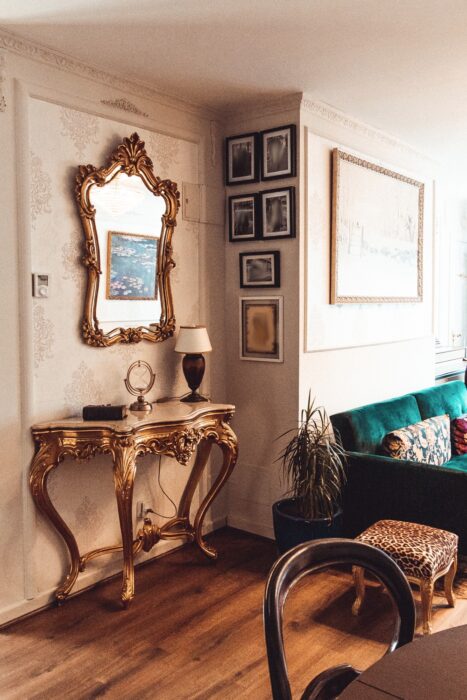
The world’s ugliest kitchen. It was one of the worst spaces in the apartment. I made it warmer and softer

One of the bedrooms


Improvised office. It had great views and lots of light. This is one of my favorite color combinations.
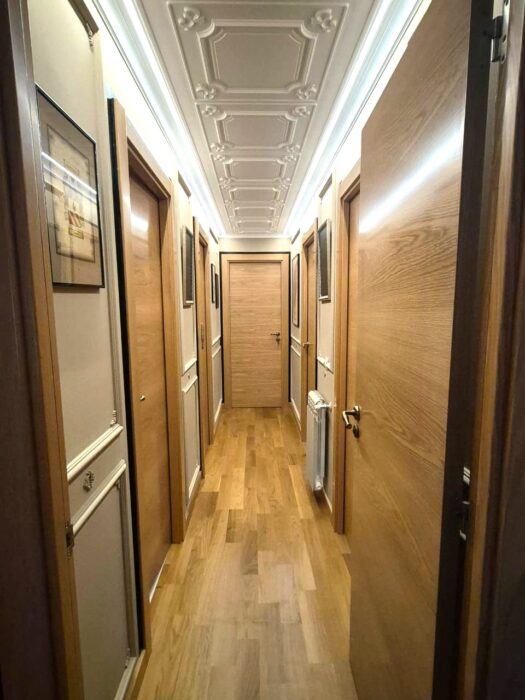
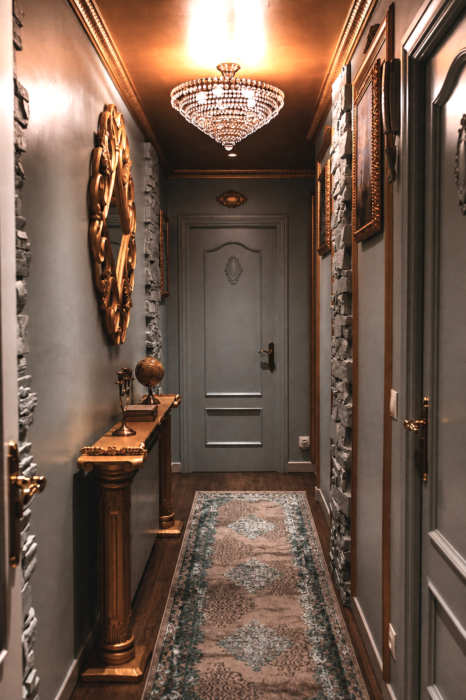
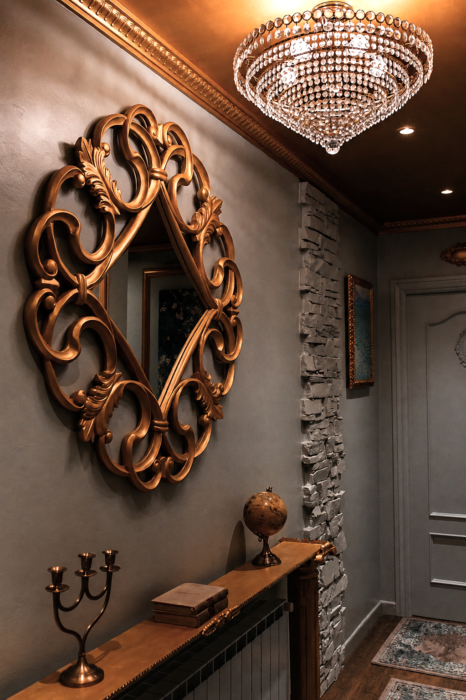
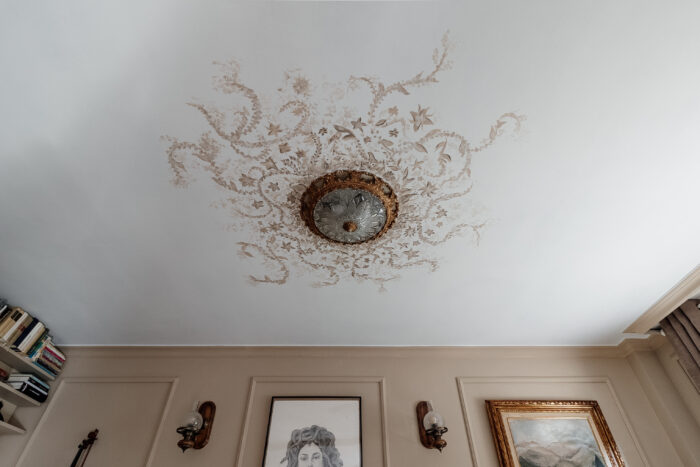
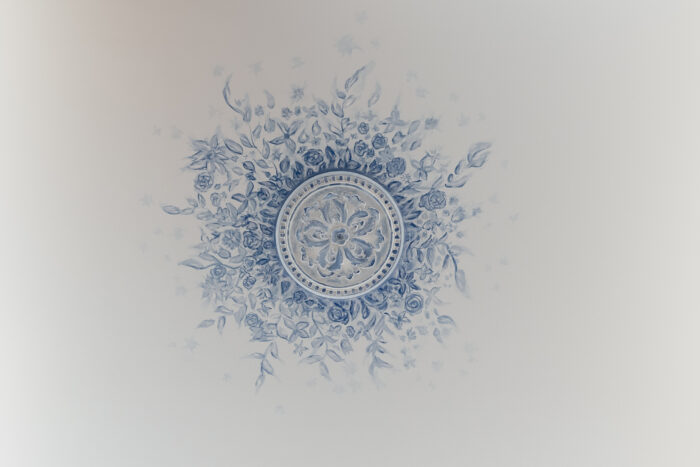
The hallway is more than just a pass-through space. I hated the stone on the walls, but I didn’t have the energy to break it and remove it, so I painted it the same color as the walls and focused on the ceiling instead.


Boy’s room. I wanted him to feel like he was in a fairy tale.

Small spaces don’t have to be boring or under-furnished.
I renovated this small bathroom. I went all in; I wanted it to feel a bit dramatic and powerful. You know, like I didn’t care what anyone would say about it.
Bathroom, variant 1.

Bathroom, variant 2. I preferred this version; it was perfectly coupled with the master bedroom.

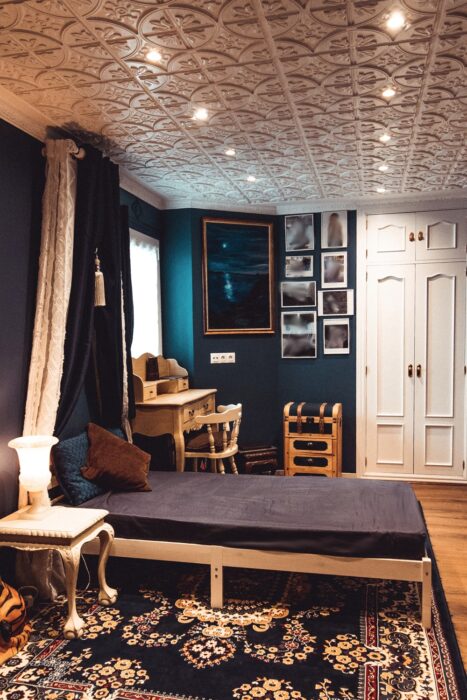
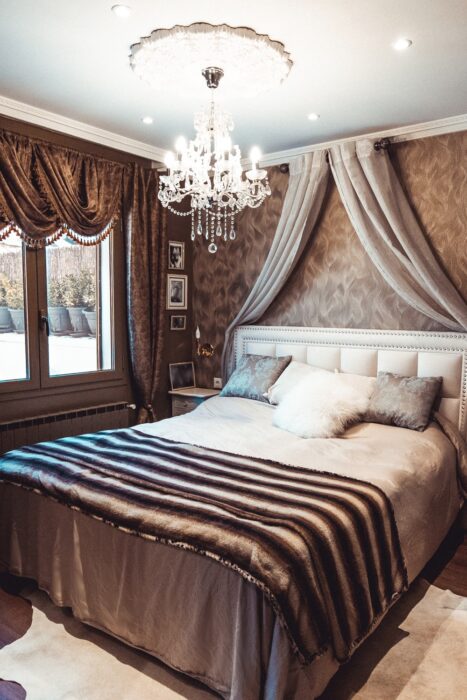
The master bedroom. It was small but cozy and fun to be in.
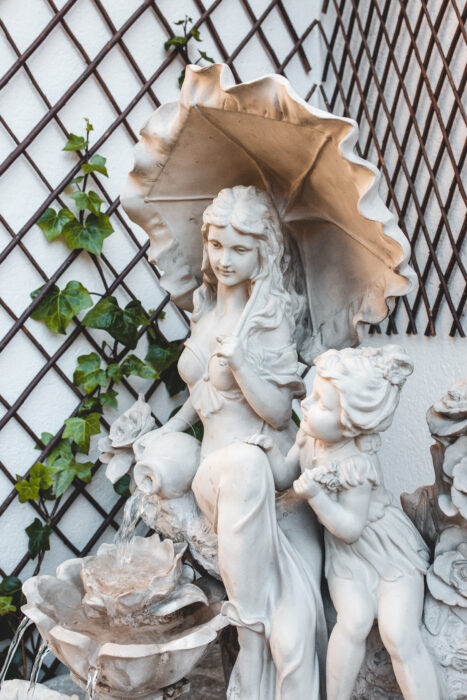
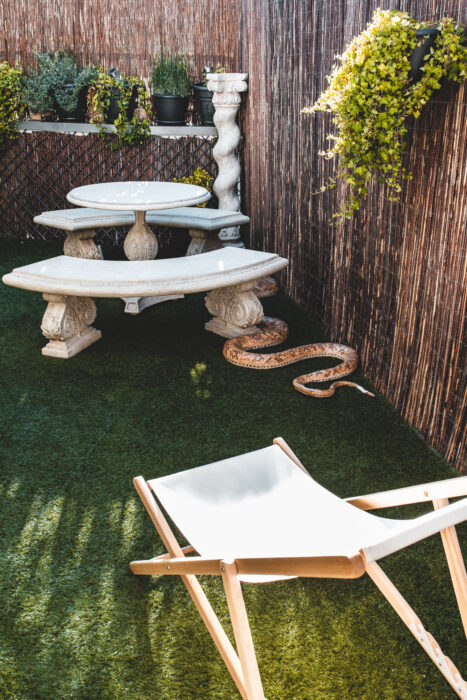
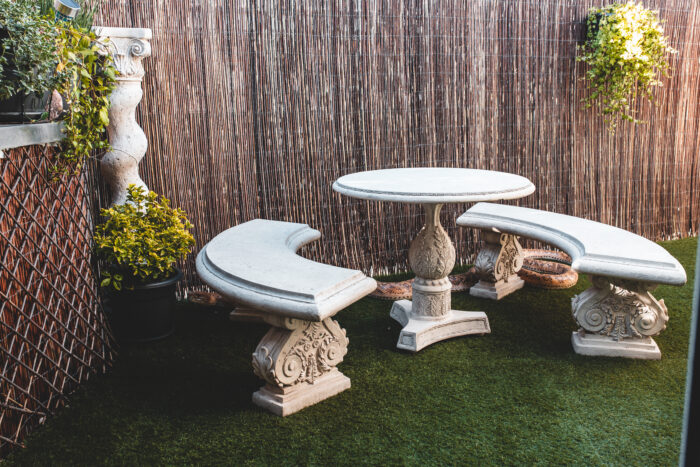
Terrace, details. I never spent much time there, but I wanted it to be as nice as possible.

A low-budget makeover

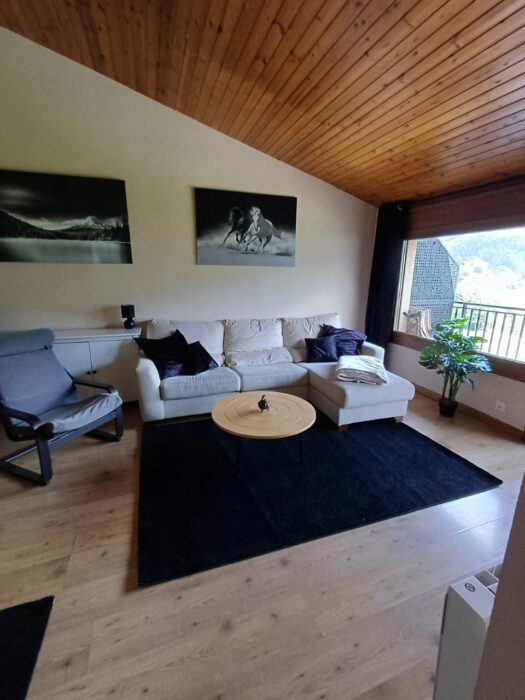
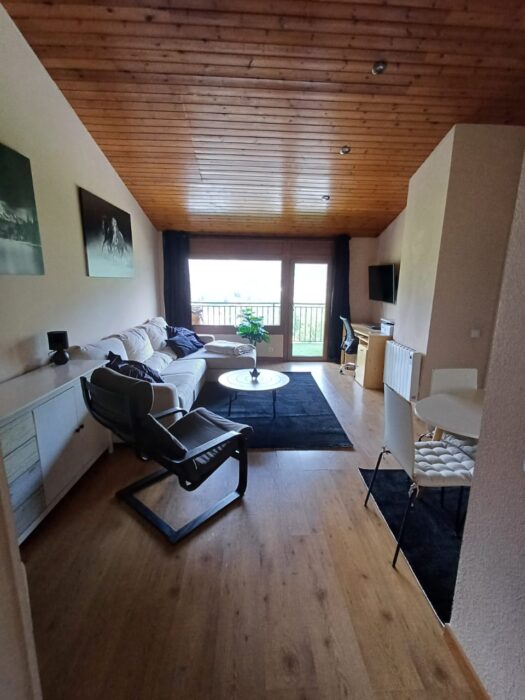
This time, I helped someone improve their space using the things they already owned. The only things that were bought were the rugs, wall art, and the drapes. The rest was already there. They wanted a masculine and minimalist space with lots of contrast and virtually no expenses.

BEFORE:
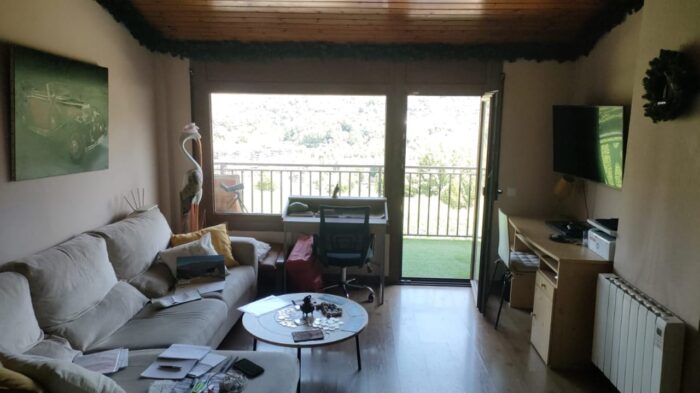
AFTER:
Sad spaces

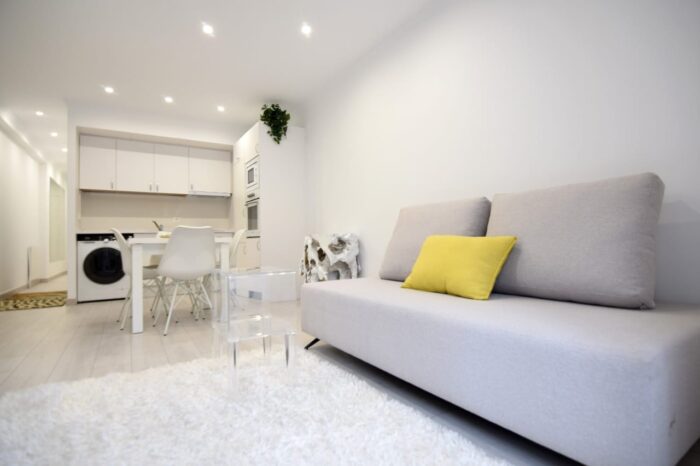
The spaces you are about to see look undesigned, although they were, in fact, designed specifically to appear impersonal and basic. They are the rentals I “designed” for future tenants; people seem to love the blinding whiteness, cold surfaces, and rough edges. I call them “sad spaces”; the sad part is that small spaces can easily be made cozy and interesting, but for some reason, people prefer it this way:
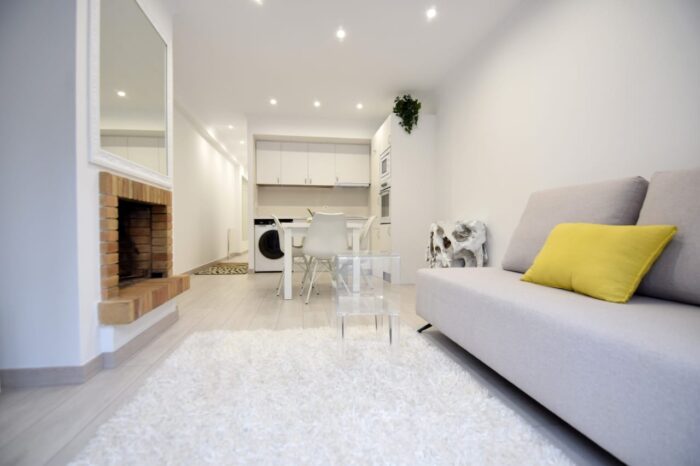
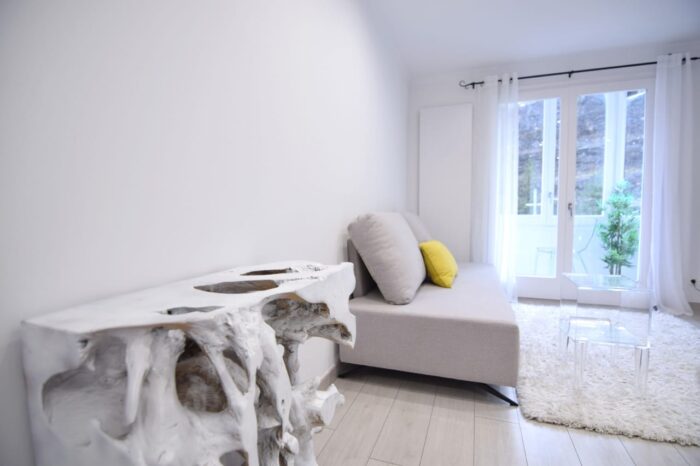
Another one – an attempt to add some texture and hoping they would not mind:
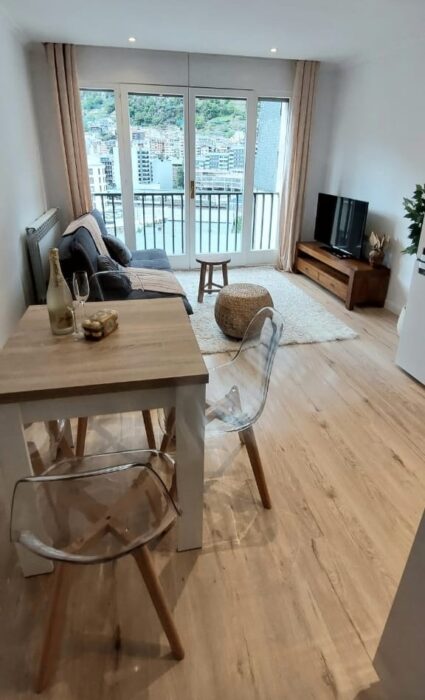
Strange Case

Shocking, touching, terrifying, heartbreaking, empowering, honest and helpful – those are some of the most common comments I get about this story. I agree with all of them, but still cannot decide which word best describes it. I leave it to you to decide.

The purpose of this book is not to scare you (at least not too much!), but to help. Not only do I aim to support psychiatrists, psychologists, therapists, and other professionals who assist children with autism, but, above all, I seek to help parents help their children. For many, this is an immense challenge, and current resources and our understanding of autism remain alarmingly limited.

In this book, you will also find helpful tips about living with autism and “staying sane”. This is not just a case documented; in a way, it is a survival guide. It is more than just a story; I hope some of this will help you, whatever difficulty you may be facing. It may give you some comfort or change your perspective.

Buy it HERE.

This Unmarked Grave

This Unmarked Grave is based on real events. The people in this book were real, but some of the names have been changed. The book presents a testimony from a remarkable man, B.T., who lived and died as an undercover intelligence officer during World War II. I will remember him forever as an extraordinary human being who tried to make a difference with all his heart.
You can buy the book here.


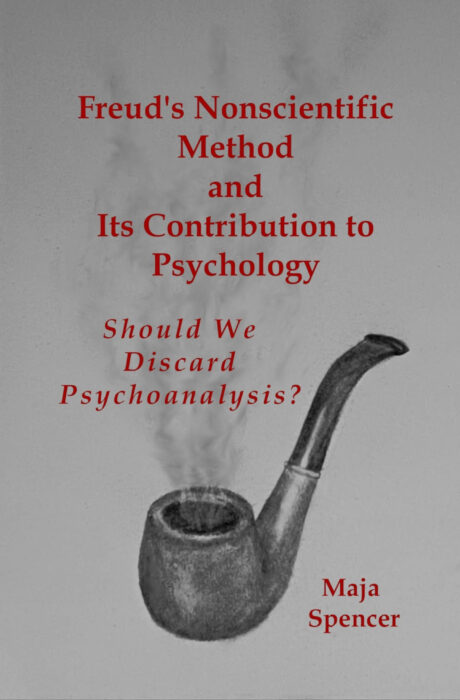
Freud’s Nonscientific Method and Its Contribution to Psychology Should We Discard Psychoanalysis?

The best way to start this book is to clearly state, for those who do not know me, that I am often “accused” of being too hard science-oriented; indeed, I question everything, and it is difficult or impossible for me to believe in unverifiable things. I never forget the importance of clarity and honesty. And if we are to be honest, psychology, one of my greatest loves, cannot be defined as a hard science. In some ways, it can, but overall, it still heavily relies on the subjective, fluid, and unmeasurable, no matter how hard we try to measure and categorize. This fact annoys many, including me. I care about facts, not opinions. I care about what is measurable and verifiable. I care about validity and reliability. However, the obvious and measurable or verifiable do not always go hand in hand.

Freud’s psychoanalysis is still regarded as one of the most influential schools of thought in the history of psychology. His theories of the unconscious, repression, and psychosexual development were the groundwork for modern psychotherapy, but they were more than that: they led to cultural and philosophical movements. Although many Freudian concepts have been revised, challenged, or abandoned thanks to new empirical findings, the essence of psychoanalysis still inspires debate. Its impact went beyond clinical boundaries and reached into the domains of art, literature, film, and everyday language. Terms such as “Oedipus complex” and “defense mechanisms” are now commonly used in everyday language. However, critics argue that the method of psychoanalysis lacks empirical support, is unfalsifiable, and resembles pseudoscience. The central question is: Should psychoanalysis be entirely discarded?
You can buy the book here

In the Trap of Cognitive Dissonance

How many times have you decided to look the other way, forget and forgive, only to be met with the same old thing over and over again, that hurts you the same as before, or even more than before? How many times have you felt sick to your stomach, and your gut was screaming, “This is bad for you,” but then you went ahead and did that very thing (the thing that was very, very bad for you)? How many times have you tried to convince yourself and others that people do change and it will be better this time around, or tried to justify someone’s behavior and your own tolerance for that behavior? Remember that time you went back to your ex, thinking “this time will be different”?
Have you ever wondered why humans do such things? Have you ever tried hard to justify someone’s behavior, and then went on to justify the fact that you were justifying that person’s behavior?

Written using real-world examples (including some of my own experiences), with simplicity and no sugarcoating, I hope this book will be useful. Perhaps it will make you think about the things you have forgotten; maybe it will encourage you to reconsider some of your decisions and help you make new ones – or you might disagree with me. No matter which of these things happens, if you only consider some of the things you will find here, this book will have fulfilled its purpose.
You can buy it here. The Spanish edition is available here.

The Empathy Switch


The Empathy Switch is a one-sit read. The book explains how complex empathy really is and sheds light on the other side of it — the side that is mostly unresearched, hidden, or purposefully ignored.
You can buy it here.

Beside Yourself, Around Yourself, and Back to Yourself

This book is meant to be a short, practical guide for professionals such as life coaches, therapists, psychologists, and counselors, in which I describe the method I call “the separation method.”

It is not a type of therapy, but an exercise that can be used in coaching, consulting, as well as in therapy; it is up to you, the professional, to find your own way of adapting it to whatever it is that you specialize in. You may wonder how I came up with it, and why I want to share it. It is all very simple – I came up with it after years of education and experience. I wish to share it because it can not do harm, but if done properly, it can help. Perhaps someone else has developed a similar method – that is quite possible. I have never heard anyone talk about it, nor did the professionals I have met. Therefore, I thought it would be a useful and interesting thing to share.
You can find it here.

Needless Thinking about Needs (2012)

“Needless Thinking about Needs” is often described as analysis through storytelling. Composed of true stories, it explores the world of illusions, fortune and misfortune, human needs, the relativity of happiness, and problems related to self-awareness.

Read the Excerpts

English, hardcopy is available HERE . The Serbian version (hardcopy) is available HERE.


About the Book

Some people have the fortune (or misfortune) to have plenty of money and a lot of free time. That can create the perfect conditions for them to discover their own (and other people’s) hidden aspects. That is also how some new needs are born, quite unexpectedly.

Money can bring you more free time and fun. You can buy whatever you want. However, all fun things come to an end eventually. And then, when the fun is over, you might find yourself alone with your thoughts. Where will they lead you?

Needless Thinking about Needs offers a picture of real life behind the illusion of comfort and happiness.

I was lucky enough to get to know a few people whose stories simply had to be told. There were also some thoughts I could not keep to myself, and it was just a matter of time before they would see the light of day. I felt I had something to say about the topics this book deals with: needs, money, illusions, and happiness.

The characters in this book are based on real people, but every character is a composite of several different personalities. Some of the personalities I came across were very similar to each other, which made it easy (and natural) to fuse them into one character. This, too, shows that human beings are more similar to each other than they think. It will not be difficult for you to recognize somebody you know (or even yourself) in some parts of this book. The decision to use fictional names and modify characters is also my way of showing respect for the people who, knowingly or unknowingly, did their part in helping me write this book. Some of them are no longer alive. I feel the need to express immense gratitude to the people who shared their stories with me.

While researching and talking to several people who could be called wealthy, it was not really important for me to know how they acquired their wealth or the extent of it. I was interested in something else. I wanted to know how they saw life and happiness. What were their needs, wishes, illusions, ambitions, and sacrifices, and where did they find their purpose? Even though the majority of people on the planet find that money is extremely important, does money really have the power to bring perfect happiness? What needs did those people have in common, and how did these needs drive them to make various mistakes? You will find at times that female characters express a deep need for love and understanding, but you will also see the various ways of striving to fulfill it and the different results of each of those ways of struggle. You will see that in other characters, satisfying that same need has a completely different goal and purpose. You will also see how satisfying other people’s needs influences some of the characters. The need for security (which many people believe can be fulfilled with money) will be examined as well.

How much comfort and security can money really bring? This book will attempt to answer this question, and what makes it credible is the fact that it comes from “first-hand” experience. It is true that characters have been altered, but their stories are not invented. I have shared some of these experiences indirectly through talk or directly as a witness to certain events. In addition, these stories could have happened just about anywhere – Belgrade, New York, or Milan. These events could have taken place in your neighborhood. While you’re enjoying your afternoon coffee, one of these stories could be happening just a few blocks away from your house. Stories like these can happen at any time, in any place. In a certain way, they happen to all of us.

I tried to understand each of those people. I tried to present them truthfully and highlight the personality traits most essential for sending out the message this book carries. It was very difficult to portray certain characters accurately without sounding judgmental. Nevertheless, they are here to help us see ourselves and the world around us a bit better, to understand ourselves and each other, and to learn to recognize the moment when it becomes necessary to stop thinking and move on – in other words: to save ourselves and those around us.

Having a lot of money opens many possibilities; one of them is the possibility of coming face to face with what is darkest inside you. Wealth enables us to buy whatever we wish for. People who become rich seldom stop to ask, “Do I really need this?” Many of them are now living in a dimension very different from the one in which they lived before they became rich. All the needs they had before becoming wealthy are finally fulfilled, but they have also discovered new needs, and every day they keep discovering more of them – or they simply make up new needs that are impossible to fulfill.

In some of the people I met, I recognized the emergence of new needs and the mistakes that, truth be told, are frequently made by many of us (including me). Some people are well on their way to making them, and this book could help them avoid such or similar mistakes. It is my hope that some of this will get to people, help them understand themselves and the world that surrounds them, possibly change some things, and accept the ones they can’t change.